

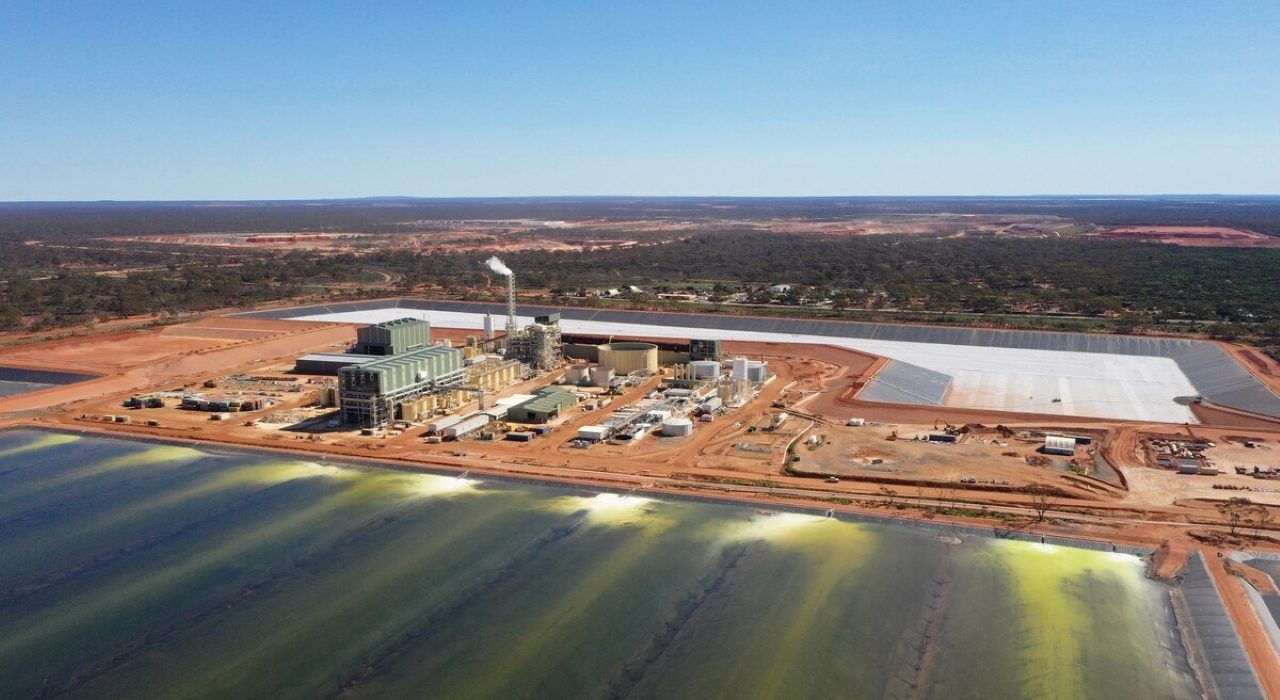
PERTH, Australia – Australia has intensified its campaign to remove China-linked investors from Northern Minerals, placing fresh restrictions around share transfers in a company whose Western Australian deposits sit at the centre of the global contest over heavy rare earths.
The latest intervention follows a three-year struggle between Canberra and shareholders connected to China over Northern Minerals, developer of the Browns Range project in Western Australia’s East Kimberley. Treasurer Jim Chalmers has repeatedly used Australia’s foreign investment laws to restrict ownership, voting rights and share transfers on national interest grounds.
During the fifth month of 2026, Chalmers ordered six shareholders to sell holdings representing roughly 17 percent of Northern Minerals. The group included Hong Kong Ying Tak, Real International Resources, Qogir Trading and Service, Chuanyou Cong, Vastness Investment Group and Zhongxiong Lin. Canberra gave the investors a July deadline to dispose of the shares to unrelated buyers. Most targeted holdings stayed on the register after the deadline.
Australia then stripped three investors of voting rights in July. Hong Kong Ying Tak, Real International Resources and Qogir Trading and Service faced interim directions after authorities said investors ignored earlier divestment orders. Northern Minerals chairman Adam Handley welcomed the intervention while the company continued reviewing its share register.
The newest reported step tightens control around disposal itself. Two parties now face a requirement to obtain government approval before transferring targeted holdings. Such a measure gives Canberra influence over both ownership and the identity of future buyers.
The dispute has moved far beyond an ordinary shareholder fight.
Browns Range contains dysprosium and terbium, two heavy rare earths central to high-performance permanent magnets. Manufacturers place those magnets inside electric vehicles, wind turbines, missiles, fighter aircraft, radar systems and other advanced equipment. China dominates global rare earth processing and permanent magnet production. Western governments increasingly treat projects outside China as strategic assets rather than ordinary mines.
Northern Minerals plans to supply material into Australia’s emerging rare earth processing chain. Canberra also wants Browns Range to support allied supply networks connected to the United States. The US Export-Import Bank has offered substantial potential financing for the project as Washington and Canberra seek alternatives to Chinese-controlled supply chains.
This explains Canberra’s persistence.
Australia welcomes foreign capital across mining, energy and infrastructure, yet critical minerals now attract deeper national security screening. Chalmers says Australia operates a robust and non-discriminatory framework. He has also said his decisions on Northern Minerals followed advice from the Treasury and the Foreign Investment Review Board.
China rejects the approach.
After the fifth-month divestment order, China’s foreign ministry urged Australia to protect Chinese investors and provide a fair, transparent and non-discriminatory business environment. Beijing has repeatedly criticised Western governments for expanding national security arguments into normal commercial activity.
The conflict exposes a wider contradiction in Australia-China relations.
China ranks as Australia’s largest trading partner. Australian iron ore, agricultural products and energy commodities feed Chinese industry. Chinese demand has generated enormous export income for Australia.
Rare earths sit under different political rules.
Canberra wants China as a buyer of Australian resources while limiting Chinese control over selected strategic deposits. Australia also wants American, Japanese, Korean and European capital to help finance new mines, refineries and processing plants.
Beijing sees selective restrictions as political discrimination.
Australia sees strategic control as economic security.
The Northern Minerals battle started before the latest orders. In 2023, Chalmers blocked Yuxiao Fund from lifting its Northern Minerals stake from about 9.9 percent to 19.9 percent. In 2024, he ordered Yuxiao and several associated investors to reduce their holdings. Authorities later alleged some shares moved to related parties rather than genuinely independent buyers.
The government then escalated enforcement.
In January, Australia’s Federal Court ordered Indian Ocean International Shipping and Service Company and Jing Tian to pay A$14 million in penalties after finding a share transfer breached a previous disposal order. Chalmers called the ruling a clear signal to foreign investors and said Canberra would defend the integrity of its investment framework.
The case also tests whether governments possess enough legal tools to force divestment from listed companies.
Ordering a sale sounds straightforward. Finding an unrelated buyer for a large block of shares under intense government scrutiny presents a harder task. Selling into the market also risks depressing the company’s share price.
Canberra therefore faces a delicate problem. Australia wants Chinese-linked investors out without damaging Northern Minerals, frightening legitimate investors or delaying Browns Range.
Delay carries strategic costs.
Northern Minerals expects Browns Range to become a major source of heavy rare earths outside China. The company needs financing, stable ownership and regulatory certainty before making a final investment decision. Continued disputes over shareholder identity complicate governance and funding.
Australia is also spending public money on competing rare earth projects.
During the fifth month of 2026, Canberra backed Arafura Rare Earths through the Critical Minerals Strategic Reserve, supporting the Nolans project in the Northern Territory. Arafura later approved a US$1.6 billion development designed to produce neodymium-praseodymium oxide for markets outside China.
The message is clear. Australia wants domestic minerals extracted, processed and sold through supply chains where Beijing does not hold decisive influence.
African governments should study the dispute closely.
Africa holds major deposits of lithium, cobalt, graphite, manganese and rare earths. Foreign investors from China, the United States, Europe, the Gulf and elsewhere increasingly compete for those resources.
Ownership matters.
A government which treats every mining investment as a simple inflow of capital risks losing strategic influence over minerals needed for future industries. African states need transparent screening rules, local processing plans, competition between investors and strong protection against political capture.
Australia’s approach also carries a warning against arbitrary exclusion. National security screening needs clear rules and evidence. Governments should not label every foreign investor a threat based on nationality alone.
Northern Minerals now sits inside a larger economic confrontation between China and Western allies.
The mine stays Australian. The minerals remain underground. The argument concerns who gains influence before production starts.
Canberra has answered with increasingly aggressive intervention.
For China-linked investors, the message grows harder with every new order.
Australia wants their money elsewhere, and Australia increasingly wants control over the door they use on the way out.