
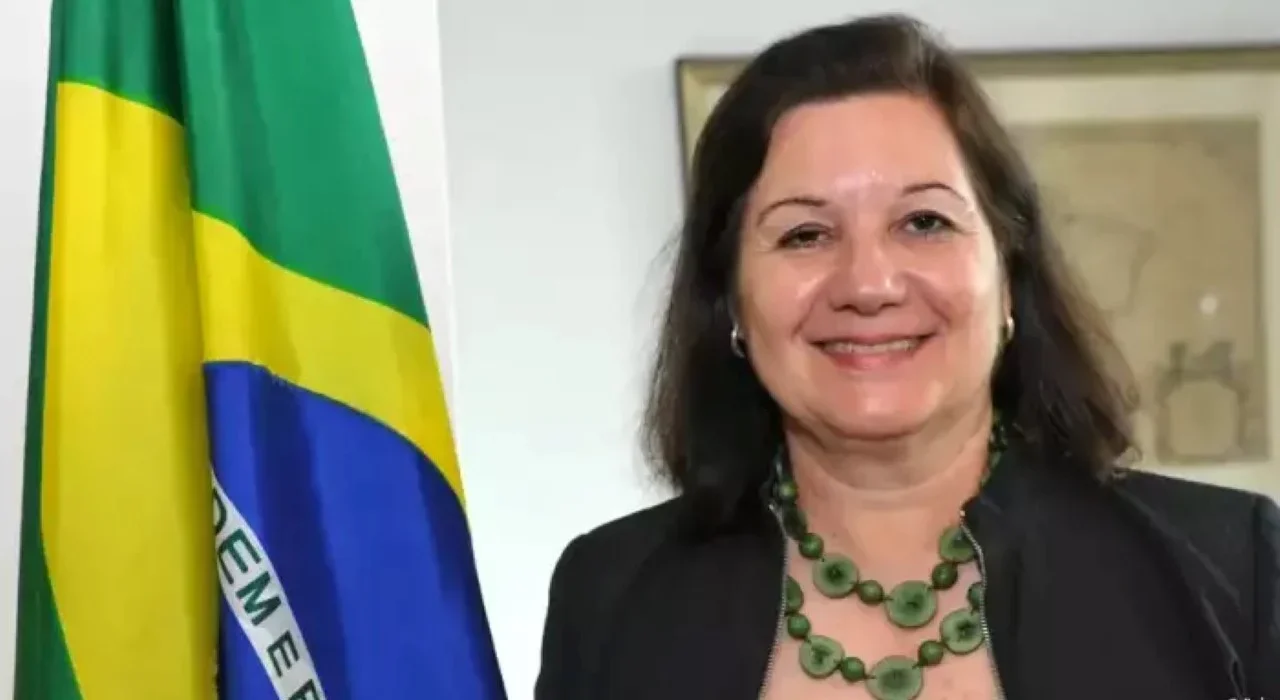
WASHINGTON, United States – The United States has revoked the visa of Brazil’s ambassador in Washington, Maria Luiza Ribeiro Viotti, pushing relations between the two largest economies in the Americas deeper into a diplomatic confrontation only months before Brazil’s presidential election.
A US State Department official confirmed the decision on Tuesday. Washington linked the move directly to Brazil’s refusal to approve President Donald Trump’s choice for US ambassador to Brasília, Daniel Perez, and Brazil’s recent refusal to grant visas to two Trump administration officials.
The action represents an extraordinary diplomatic escalation. Viotti remains Brazil’s accredited ambassador and Washington has not formally expelled her. Revoking her visa instead places direct pressure on Brasília while leaving space for reversal.
A US official said Washington would restore Viotti’s visa after Brazil approves Perez.
Brasília insists diplomatic accreditation follows established procedures and rejects American pressure over the appointment.
The dispute surrounding Perez carries political sensitivity because Brazil enters a presidential election in October. President Luiz Inácio Lula da Silva seeks another term against Senator Flávio Bolsonaro, son of former president Jair Bolsonaro and a political ally of Trump.
Brazilian officials increasingly accuse Washington of trying to influence domestic politics before voters go to the polls.
Those suspicions intensified in July when Brazil refused visas for two State Department officials, Riley M. Barnes and Samuel Samson. Brazilian officials told Reuters the pair planned to visit Brazil and question the integrity of the country’s electoral system. Brasília viewed the proposed visit as an attempt to influence the presidential campaign.
Washington has not accepted Brazil’s interpretation.
American officials describe Brasília’s actions as obstruction of normal diplomatic engagement. The Trump administration argues Brazil has delayed Perez’s accreditation without adequate justification and blocked American diplomats from conducting legitimate official work.
Each government now accuses the other of crossing diplomatic lines.
The timing raises the stakes.
Brazil operates one of the world’s largest electronic voting systems. Jair Bolsonaro repeatedly questioned the system before losing the 2022 presidential election to Lula. Brazilian courts later convicted him over a plot aimed at overturning the result, and he now lives under house arrest.
Trump has publicly defended Bolsonaro and criticised Brazilian institutions involved in proceedings against him.
Lula responded earlier this year by warning Trump to stay away from Brazil’s electoral process. He acknowledged Trump’s right to hold a political preference while rejecting any American attempt to shape the election.
Visa disputes therefore sit inside a much larger political confrontation.
Relations deteriorated sharply during 2025 after Washington imposed visa restrictions and financial sanctions on Brazilian officials linked to legal actions involving Bolsonaro. US tariffs on Brazilian exports then widened the dispute into trade.
A Congressional Research Service report recorded American visa revocations against several Brazilian Supreme Court justices and other officials during 2025. Washington linked those measures to concerns over judicial actions involving social media regulation and Bolsonaro.
Brazil described those measures as interference in its sovereign judicial system.
The latest ambassador dispute moves pressure into traditional diplomacy.
Ambassadors normally receive broad protection because governments need functioning channels even during serious disagreements. Removing access from an ambassador risks weakening communication precisely when communication matters most.
Viotti has represented Brazil in Washington since 2023. Brazil’s Senate approved her nomination by 44 votes to one. She previously served as Brazil’s ambassador to the United Nations and held senior diplomatic positions across several administrations.
Her removal from normal diplomatic work would therefore carry symbolic and practical consequences.
Brazil and the United States share deep commercial relations. Companies move agricultural products, aircraft, machinery, energy products, technology and services between both markets. Diplomatic hostility raises risks for investment and commercial planning.
Political confrontation also creates space for China.
China already ranks among Brazil’s most important trade partners. Beijing buys huge volumes of Brazilian soybeans, iron ore, oil and agricultural products. Brazil also plays a major role inside BRICS.
Every serious rupture between Washington and Brasília strengthens arguments inside Brazil for deeper commercial and diplomatic diversification toward China and other partners.
Washington faces a difficult strategic calculation.
Pressure might force Brasília to accept Perez and restore normal diplomatic channels. Excessive pressure might instead strengthen Lula’s domestic position by allowing him to campaign as a defender of Brazilian sovereignty against foreign intervention.
Trump’s support for Flávio Bolsonaro creates another complication.
Any American action against Brazil during the election season risks entering Brazilian political debate as indirect support for one candidate. Even measures designed as diplomatic retaliation acquire electoral meaning once candidates turn them into campaign messages.
Brasília faces risks as well.
Refusing diplomats or delaying an ambassador without transparent reasoning invites questions over whether Brazil also uses diplomatic procedure for political purposes.
Brazil should explain the legal and diplomatic basis for every refusal. Washington should provide equal clarity regarding Viotti’s visa revocation.
Diplomacy loses credibility when governments replace formal explanations with retaliation.
Both countries also need to separate election disputes from long-term state relations.
Trump and Lula will eventually leave office. American and Brazilian businesses, universities, militaries, diplomats and citizens will continue working with one another.
Presidents should not turn institutional relationships into personal contests.
The immediate question concerns Perez.
Washington wants rapid Brazilian approval. Brasília says diplomatic accreditation belongs to a sovereign process and rejects public pressure.
International practice gives receiving states considerable authority over ambassadorial acceptance. Governments routinely conduct consultations privately before formal nominations. Brazil has criticised Washington for publicly announcing Perez before Brasília completed its process.
The US response now places equal pressure on Viotti.
Neither side benefits from a prolonged diplomatic vacuum.
The confrontation arrives while Washington already faces strained relations across parts of Latin America. Brazil carries immense regional influence through Mercosur, BRICS, the G20 and wider Global South diplomacy.
A political fight with Brasília therefore reaches beyond two embassies.
Trump wants Brazil to accept his ambassador.
Lula wants Washington to respect Brazilian institutions and stay outside the election.
Between those positions sits a diplomatic relationship built across two centuries.
Revoking Maria Luiza Ribeiro Viotti’s visa sends a forceful message. The larger question now concerns whether Washington and Brasília still possess enough political restraint to stop a visa dispute from becoming a lasting rupture between two major powers in the Americas.