
PORT SUDAN, Sudan – Sudan’s war has survived far beyond the point where battlefield exhaustion should have forced both main armed camps toward compromise. Foreign money, weapons, drones, fuel, mercenaries and political protection keep replenishing the conflict.
The Rapid Support Forces, or RSF, grew from a paramilitary structure created under former president Omar al-Bashir. The force now controls Darfur and fights the Sudanese Armed Forces across Kordofan and other fronts. After more than three years of war, the RSF still fields drones, artillery, vehicles and foreign fighters despite huge losses.
A major supply artery runs through southeastern Libya. United Nations experts documented RSF cooperation with Libyan National Army brigades operating under the wider military structure led by Khalifa Haftar. Earlier UN findings identified the Subul al-Salam brigade in Kufra as an important facilitator for fuel, vehicles and ammunition moving toward the RSF. A later UN report said Haftar-aligned forces controlled key stretches between Sabha and Jufrah and monitored smuggling routes linking Libya, Chad and Darfur.
The corridor matters because geography gives the RSF depth outside Sudan. Convoys entering from Libya bypass army-controlled eastern ports and airports. Supplies move across remote desert routes where national authorities struggle to police borders.
The United Arab Emirates sits at the centre of the most serious allegations surrounding external support for the RSF. Abu Dhabi rejects accusations of arming the group. Investigations from Amnesty International, UN experts, Reuters and other organisations have repeatedly identified weapons, aircraft, contractors and logistics networks with links to the Emirates.
Amnesty International reported in 2025 Chinese-made GB50A guided bombs and AH-4 howitzers reached RSF forces through supply chains linked to the UAE. Investigators said available evidence strongly pointed toward Emirati transfer of those weapons. Abu Dhabi has repeatedly denied supplying military support to the paramilitary.
Evidence surrounding foreign resupply grew stronger this week. Reuters reported on a draft UN investigation which found Boeing 727 aircraft previously traced through hubs in Sudan, Chad, Libya and Somalia carried weapons, drones and mercenaries for the RSF. The investigation also identified Colombian fighters recruited through a UAE-based private security company. Those fighters later appeared in operations linked to the siege of al-Fashir.
This foreign pipeline helps explain why the RSF has not collapsed under battlefield losses.
Gold supplies another part of the equation. Sudan ranks among Africa’s major gold producers. Both armed camps use gold networks to generate hard currency. Reuters reported the UAE bought almost 90 percent of Sudan’s legal gold exports during the first half of 2025, worth about $840 million. Analysts also trace large volumes of smuggled gold toward the Emirates through Egypt and other routes.
Gold leaves Sudan while hard currency, weapons and political influence flow back into regional networks. The arrangement turns mineral wealth into fuel for war instead of schools, hospitals and reconstruction.
The UAE also holds wider commercial interests around the Red Sea and Horn of Africa. Emirati companies have pursued ports, farmland, logistics and trade projects across the region. Sudan’s location gives enormous strategic value. A long Red Sea coastline, agricultural land, gold and access toward the Sahel place the country inside a wider contest for regional influence.
None of this removes responsibility from Sudanese commanders.
RSF leaders chose war, committed atrocities and built a force around coercion and armed patronage. The United States has accused the RSF of genocide in Darfur. UN investigators and rights groups have documented killings, rape, abductions and ethnic violence.
The Sudanese army also carries a grave record. Rights organisations accuse army forces and allied militias of indiscriminate strikes, arbitrary detention and other abuses. Foreign sponsorship does not transform either camp into an innocent actor.
Egypt has chosen the army as its principal partner. Cairo views Sudanese state collapse and RSF expansion as direct threats along a border stretching more than 1,200 kilometres. Reuters reported Egypt deployed Turkish-made Akinci combat drones near the Sudan border and cited officials who acknowledged logistical and technical support for the army.
Iran strengthened military links with the army through drones and other assistance. Turkish systems also support army operations. Qatar and Saudi Arabia provide political backing to varying degrees. Each government frames involvement through security or stability. Each government also pursues influence.
Sudanese civilians pay for every foreign calculation.
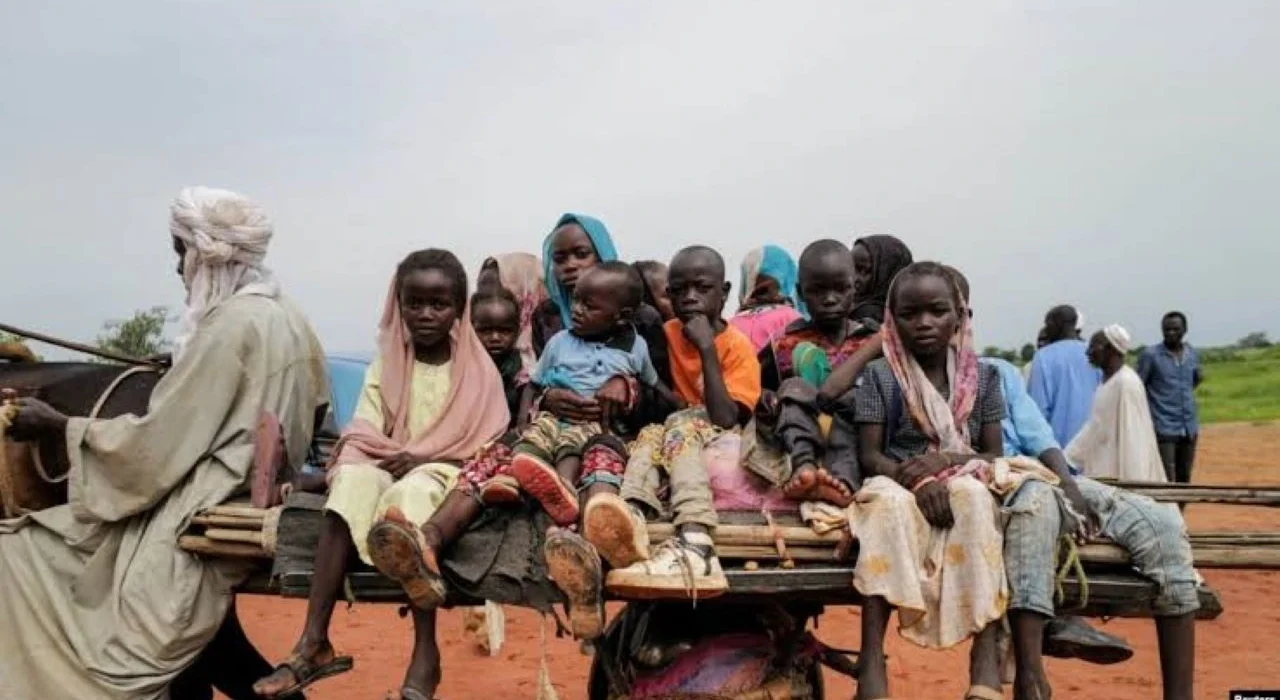
Cities have emptied. Farms have stopped producing. Famine has spread. Nearly three quarters of Sudan’s population now needs humanitarian assistance, according to Reuters reporting based on UN assessments. Millions have fled across internal and international borders.
Outside sponsorship changes the logic of war. A commander who expects fuel next month, drones next week and cash after the next gold shipment sees less reason to compromise today.
Agnès Callamard of Amnesty International captured the central problem: “Unless the flow and supply of arms to Sudan is cut, civilians will continue to suffer.”
The African Union and United Nations need a strategy focused on supply lines, not another cycle of statements after massacres.
The Security Council should expand serious monitoring beyond Darfur, publish named entities involved in embargo violations and apply targeted sanctions against companies, aircraft operators, financiers and commanders who sustain illicit transfers.
African governments should demand transparent accounting for Sudanese gold entering regional markets. Refineries and banks should identify beneficial owners, source mines and transport routes before accepting shipments.
Libyan authorities and external partners with leverage over Haftar’s forces should close military corridors feeding Sudan. Egypt, the UAE, Turkey, Iran, Qatar and Saudi Arabia should face equal diplomatic pressure over any support prolonging combat.
Sudan does not suffer from a shortage of weapons. Sudan suffers from a surplus of foreign interests.
A war which once centred on a struggle between Abdel Fattah al-Burhan and Mohamed Hamdan Dagalo has become part of a wider contest involving gold, ports, farmland, trade routes and regional power.
The result is brutal. External actors gain leverage. Armed leaders gain resupply. Sudanese families lose homes, children and futures.
Peace efforts will fail while diplomacy asks commanders to stop fighting and foreign networks keep filling their arsenals.
Close the supply lines, expose the financiers, trace the gold and punish embargo violations. Only then will battlefield exhaustion start pushing Sudan’s armed leaders toward a settlement.