FORT BRAGG, United States – The United States Army has activated a new psychological operations company focused largely on Africa, forcing African governments, journalists and citizens to confront a serious question. Who shapes African opinion, under whose authority, and for whose strategic benefit?
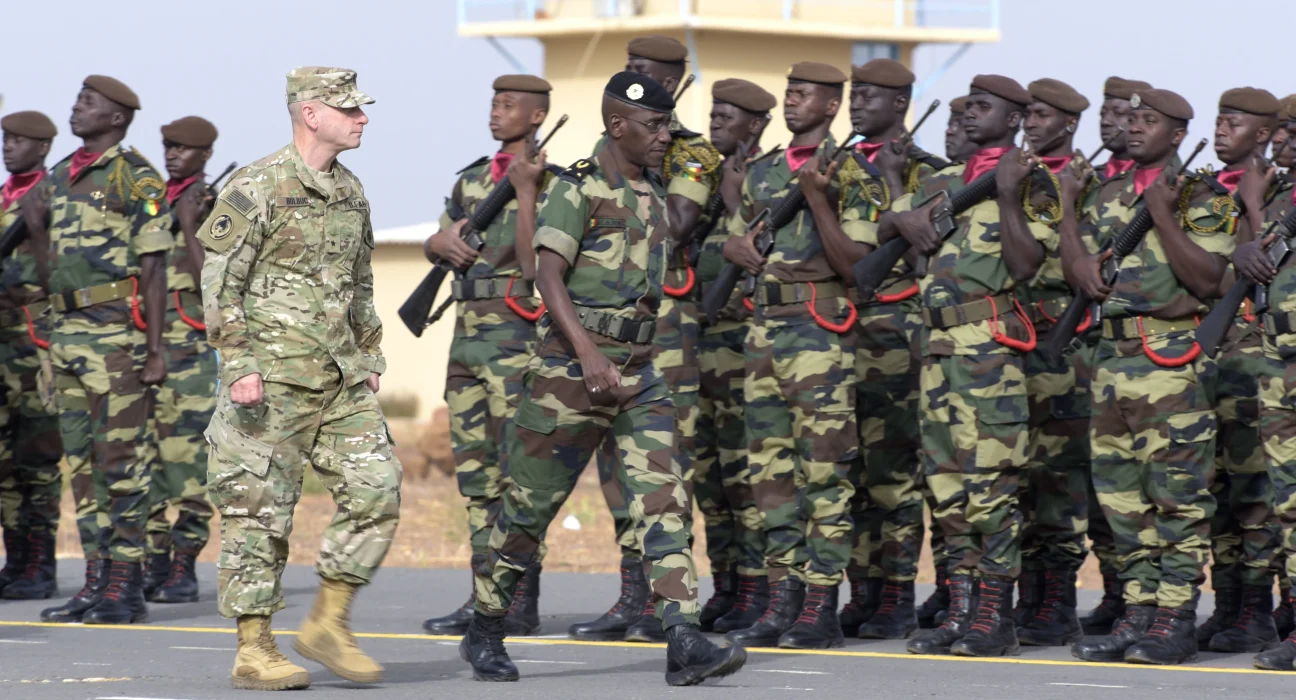
The Army activated Delta Company, nicknamed Drongo Company, at Fort Bragg on July 15. The company belongs to the 7th Psychological Operations Battalion, a unit responsible for operations across the U.S. Africa Command area. The Army says the company gives commanders greater flexibility across contested environments and supports American national security interests.
The chosen name deserves attention. A drongo bird mimics other animals, frightens them and steals their food. The Army presented this behaviour as a tribute to psychological operations, whose mission seeks to influence “reasoning, motives and behaviors of key audiences.”
African readers should pause over those words.
A foreign military has formed a specialist company trained to influence audiences across African societies. AFRICOM openly states psychological operations use radio, print, television, text messages, direct engagement, websites and social media. Priority areas include the Lake Chad Basin, the Horn of Africa, the Maghreb and the Gulf of Guinea. AFRICOM says those campaigns target terrorist recruitment, hostile propaganda and foreign state influence.
Those security goals do not remove the democratic concern. Military influence work enters the same information space used by African voters, journalists, activists, students, religious leaders and political parties. Messages aimed at one group travel across borders and platforms. Material produced for counterterrorism soon enters ordinary public debate.
The Army announcement does not state Drongo Company will impersonate Africans. AFRICOM’s published material also offers no admission of false African personas. Claims about direct impersonation therefore exceed available public evidence.
Yet Africa still faces a legitimate warning.
Psychological operations exist to alter foreign attitudes and conduct in favour of American political and military objectives. U.S. Army writing defines the field through planned activities aimed at creating beliefs and behaviour favourable to United States objectives. American doctrine often stresses truthful information, but truth does not remove selective framing, hidden sponsorship or strategic intent.
Washington regularly condemns foreign information manipulation by Russia, China and other rivals. American and European officials describe such operations as threats to democratic trust and national sovereignty. Africa should apply one standard to every external actor. Russian manipulation does not become acceptable because Moscow opposes Western power. American influence does not become harmless because Washington describes its message as security cooperation.
Attribution matters. African audiences deserve to know when military personnel, contractors, partner agencies or sponsored communicators stand behind online material. Every message connected to a foreign military campaign should carry clear identification. Secret sponsorship corrupts public debate even when individual statements contain accurate facts.
Past American programmes show why scrutiny matters. An Army legal article described a contractor requirement to operate foreign-language websites and develop networks of native or indigenous contributors in politics, security, culture and entertainment. Such arrangements blur the line between public information and covert persuasion when audiences lack clear knowledge of the sponsor.
The claim linking Drongo Company directly to Michael Langley also needs correction. Langley stopped serving as AFRICOM commander in August 2025. Air Force General Dagvin Anderson now leads the command. The official activation announcement does not link Drongo Company to personal failure by Langley.
Langley’s period still ended during major American setbacks. Niger ordered United States forces out and closed access to a costly drone base. Sahel governments shifted toward Russia, while American security influence weakened across parts of West Africa. Washington also considered structural changes to AFRICOM. Those developments provide context for a stronger information campaign, though no public evidence proves Drongo emerged as punishment for Langley’s record.
Africa should avoid a lazy response. Rejecting every American message while accepting Russian, Chinese, Turkish, Iranian or Gulf propaganda would replace one dependency with another. Every outside government pursues its own interests. African states need institutions able to identify sponsors, verify claims and protect citizens from manipulation regardless of origin.
The first defence lies in disclosure laws. African governments should require social media platforms, political consultants, media houses and public relations firms to disclose foreign state funding. Paid political content linked to a foreign military or intelligence institution should carry a permanent label.
The second defence lies in independent public broadcasting. State broadcasters controlled by ruling parties leave citizens vulnerable. When domestic media lose credibility, foreign actors enter the gap with money, production capacity and targeted narratives.
The third defence lies in digital literacy. Schools and universities should teach students how influence operations select facts, exploit fear, divide communities and manufacture social proof. Citizens need skills for examining sources, funding, timing and coordination.
The fourth defence lies in parliamentary control. Defence committees should demand full disclosure from governments cooperating with foreign psychological operations. Which ministries approved access? Which audiences face targeting? Which languages appear in campaigns? Which private companies hold contracts? Which data informs targeting?
African governments also carry blame. Corruption, repression, unemployment and weak services create the grievances foreign actors exploit. A truthful message about official failure still serves external strategy when foreign planners select, package and amplify the grievance. Leaders who silence local journalists then complain about foreign propaganda have abandoned their own information sovereignty.
Drongo Company marks a new stage in open military competition over African perception. The unit’s existence is public. Its future products, partners, accounts and methods might prove far harder to identify.
Africa should neither panic nor sleep.
You should question sudden online personalities who promote military partnerships without disclosure. You should examine coordinated messages which appear across several countries at once. You should ask who paid for research, travel, videos and advertising.
The deepest warning concerns sovereignty. A country does not control its future when foreign militaries shape public opinion more effectively than local institutions inform citizens.
Africa needs open media, credible governments and enforceable rules for foreign influence. Without those protections, the continent will host another strategic contest where Africans supply the audience, the data and the consequences while external powers write the script.