
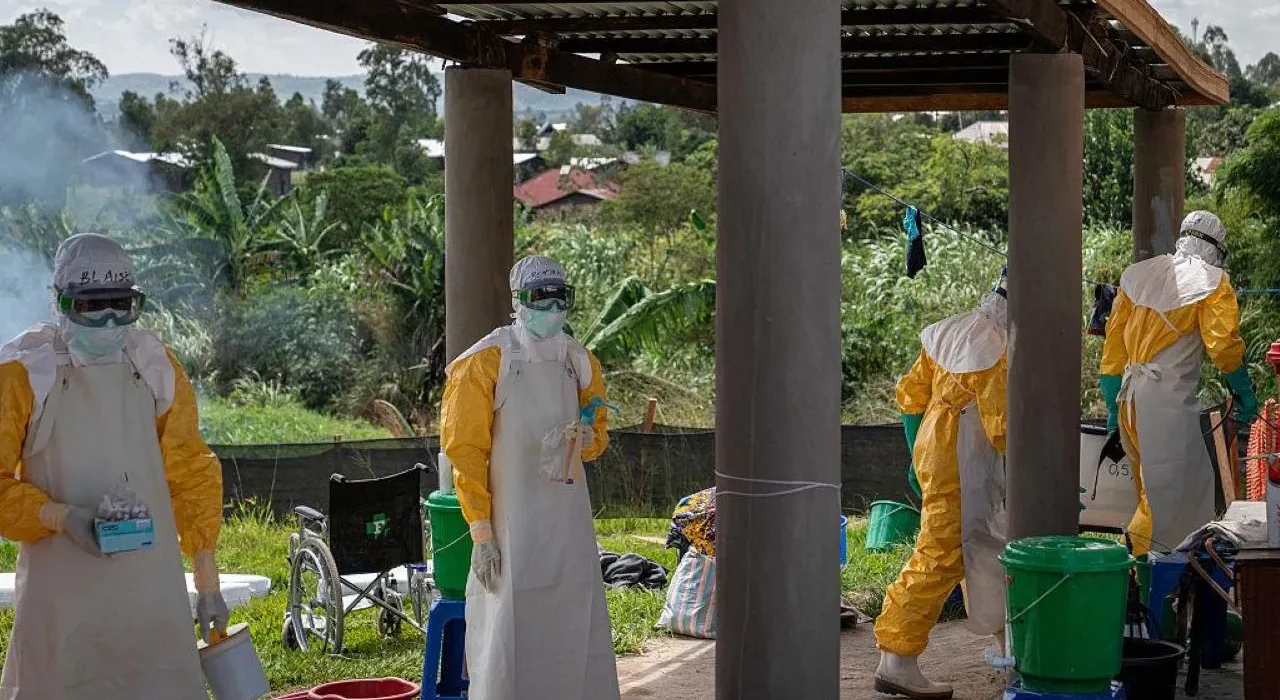
BUNIA, Democratic Republic of the Congo – Congo’s Ebola emergency entered a more dangerous phase on Saturday after confirmed infections passed 3,000 and deaths rose beyond 1,350, while scientists administered an experimental Bundibugyo vaccine to a human volunteer for the first time.
Government figures released on July 25 placed the outbreak at 3,075 confirmed cases and 1,354 deaths. The case total rose 27 percent within one week. Deaths increased by more than 40 percent within five days. Public health consultant Abdulsalami Nasidi described the spread as “like a wildfire.”
The figures show an emergency moving faster than institutions responsible for stopping transmission. European disease monitors reported 2,905 confirmed infections and 1,269 deaths from data available through July 22. Within three days, official totals added 170 cases and 85 deaths. Ituri recorded most infections, with North Kivu and Haut-Uele also reporting fresh cases.
Numbers released during an expanding outbreak require careful reading. Expanded testing often clears sample backlogs and adds older infections to a new report. WHO has repeatedly warned newly reported cases do not always represent infections acquired during the same reporting period. Even with this caution, sustained transmission across dozens of health zones leaves no basis for complacency.
The virus involved is Bundibugyo ebolavirus, a rare species without a licensed vaccine or approved specific treatment. Existing Ebola vaccines protect against the Zaire species and do not offer an established shield against Bundibugyo. This scientific gap has left communities dependent on early diagnosis, isolation, safe care, contact tracing, dignified burials and trusted local communication.
Friday brought an important scientific milestone. Oxford University vaccinated the first volunteer in the world’s first human trial of a vaccine designed specifically for Bundibugyo ebolavirus. The Phase I study will examine safety and immune response in 50 healthy adults aged 18 to 55. Researchers plan further studies in Uganda after regulatory approval.
The Serum Institute of India produced and stockpiled about 620,000 doses within two weeks. The institute also supplied 4,000 investigational doses for the trial. The speed offers hope, yet nobody should confuse a stockpile with a ready public vaccination campaign. Researchers still need safety data, immune-response findings, regulatory review and later-stage evidence before broad emergency deployment.
Africa CDC Director General Jean Kaseya issued the necessary warning when the trial started. “Early-stage clinical trials are not an immediate solution for communities facing the outbreak today,” he said. His statement placed safety, African priorities, community trust and equitable access at the centre of vaccine development.
Treatment research has also begun inside Congo. The WHO-sponsored PARTNERS trial is testing monoclonal antibody MBP134, remdesivir and a combination of both therapies. Researchers seek evidence showing whether either approach improves survival among patients diagnosed with Bundibugyo virus disease. No team should present either treatment as proven before trial results arrive.
Science alone will not end this outbreak.
Trust now stands beside medicine as a life-saving intervention. WHO says community engagement holds the key to containment. Residents need credible information from people they know, in languages they speak, delivered through churches, local leaders, women’s groups, survivors, traders and health workers rooted in affected neighbourhoods.
Public suspicion does not emerge from ignorance alone. Communities in eastern Congo have endured armed conflict, displacement, weak clinics, unpaid public workers and repeated humanitarian emergencies. A response team arriving with vehicles, protective suits and foreign funding often meets families whose ordinary hospital lacked drugs one week earlier. Authorities lose trust when emergency money appears beside years of neglect.
Current labour disputes deepen the danger. Health workers at an Ebola treatment centre in Bunia went on strike over two months of unpaid performance bonuses. Doctors, nurses and security staff disrupted services while cases climbed. Earlier strikes affected Bunia General Hospital. Government officials said a mobile-money payment system would address the dispute.
No government should ask workers to enter Ebola wards while withholding agreed payments. Delayed compensation damages morale, encourages absenteeism and feeds rumours about stolen response funds. Each unpaid nurse weakens surveillance. Each absent cleaner raises infection risk. Each angry worker becomes evidence for communities already questioning official promises.
Contact tracing also shows dangerous weaknesses. European monitors reported follow-up coverage of 74.5 percent among identified contacts in Ituri, North Kivu and Tshopo. Such coverage leaves a large group outside daily monitoring. Missed contacts often travel, care for relatives or seek treatment late, extending invisible transmission chains.
Officials must reject coercive communication. Armed escorts, forced isolation and secrecy around burials often deepen fear. Response teams should explain every step, seek family involvement where safety permits, compensate affected households and provide food for people placed under monitoring. Isolation without support punishes honesty and drives symptoms underground.
African governments also need regional preparation. Uganda reported no new case after June 21 and entered enhanced surveillance after its final patient tested negative twice. Cross-border movement still demands screening, laboratory readiness and rapid information exchange. Panic-driven border closures would push travel onto informal routes and reduce visibility.
The outbreak carries a hard lesson for Africa’s health strategy. Vaccine research started at emergency speed only after transmission exploded. Governments and donors repeatedly fund panic after detection while neglecting long-term work on rare pathogens, regional laboratories, community health systems and local manufacturing.
Congo needs money now, but money must reach wards, workers and communities. Authorities should publish daily payments, medicine stocks, laboratory turnaround times, contact-tracing coverage and district-level deaths. Open data will not remove suspicion overnight. Secrecy will deepen public suspicion.
WHO Regional Director for Africa Mohamed Janabi warned in July about an outbreak advancing faster than the response. Since then, official totals have grown far beyond the figures he cited. The next stage will depend on whether leaders combine scientific urgency with public honesty.
A vaccine candidate offers hope for future weeks and months. Trust determines what happens today. Congo will not stop Ebola through laboratories while treatment staff strike, families hide symptoms and communities distrust burial teams.
The outbreak has passed 3,000 confirmed cases. Every delayed payment, missed contact and unanswered rumour now carries a measurable human cost.