

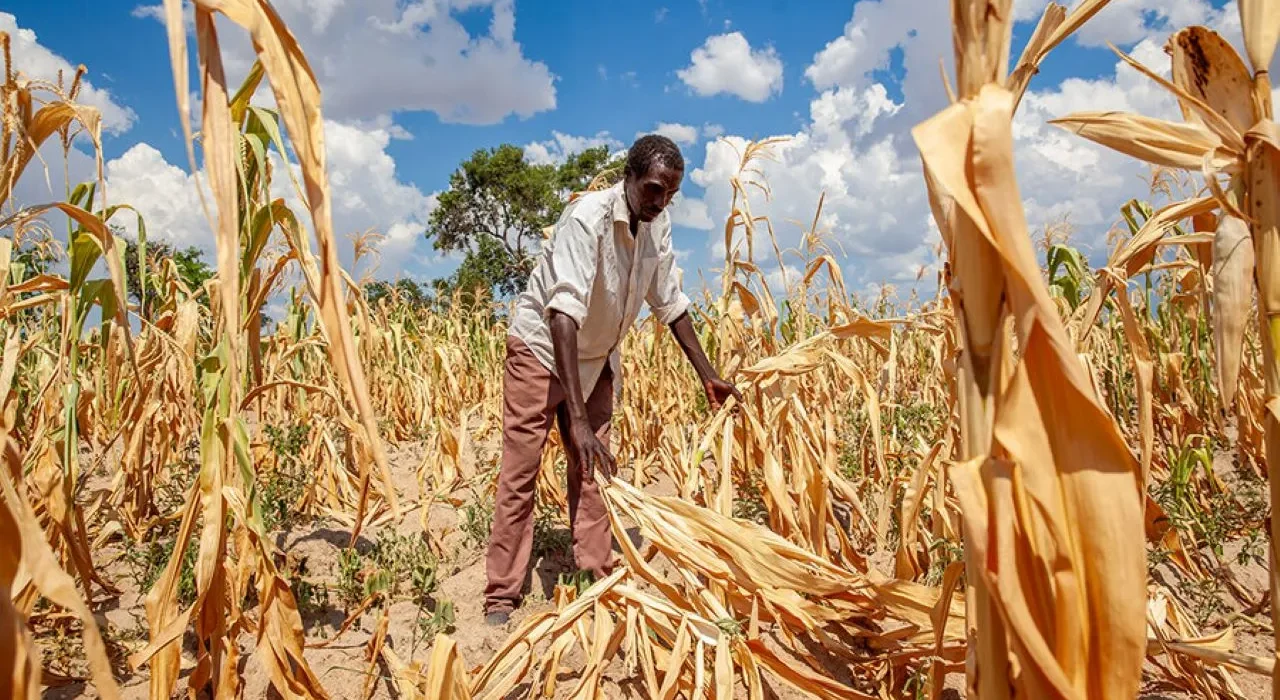
ABIDJAN, Côte d’Ivoire – Africa faces an economic loss of between $10 billion and $20 billion as a rapidly strengthening El Niño threatens farms, water supplies, roads, power systems and already strained national budgets.
Anthony Nyong, the African Development Bank director for climate change and green growth, placed the expected losses at “about $10 billion to $20 billion across the continent.” He said heavily affected economies face average gross domestic product losses of 1 percent to 2 percent. The warning marks the first continent-wide El Niño loss estimate from a major multilateral development bank.
The forecast should command immediate attention from presidents, finance ministers, central banks and agricultural agencies. Africa enters the danger period with high debt, expensive borrowing, weak insurance coverage and millions of households dependent on rain-fed farming.
The World Meteorological Organization reported strong El Niño development during July to September 2026. Forecast centres expect sea-surface temperature anomalies above 2 degrees Celsius across key Pacific monitoring zones. WMO Secretary-General Celeste Saulo warned of higher drought, heavy rainfall, land heatwave and marine heatwave risks.
The United States Climate Prediction Center issued an El Niño Advisory on July 9. Its outlook gave El Niño a 97 percent chance of lasting into early spring 2027. Pacific warming and atmospheric changes already show a stronger event, while forecasts point toward further intensification before year-end.
No forecast guarantees identical damage across every African country. El Niño shifts rainfall and temperature patterns differently across regions. Southern Africa often faces drought and extreme heat. East Africa often faces heavier rainfall and floods. Coastal economies face storms, damaged ports, marine heat and falling fish productivity.
Nyong identified Sudan, South Sudan, Democratic Republic of Congo, Somalia, Mali, Burundi and Nigeria among states facing severe pressure. Conflict, displacement, hunger and weak public institutions already burden several countries on his list. A major climate shock would multiply existing emergencies.
Food offers the first economic warning. Farmers lose seed, fertiliser, cattle and income when rainfall fails. Floods destroy crops, storage sites, bridges and rural roads. Traders then pay more for scarce grain. Governments import food using limited foreign currency. Households reduce meals while inflation spreads through transport, retail and wage demands.
Nyong expects maize prices to double in heavily affected areas. He also projected agricultural income losses near $327 million and a fisheries productivity decline of 1 percent to 4 percent. Warmer seas and severe storms threaten fishing communities already facing depleted stocks and expensive fuel.
Southern Africa carries recent evidence. The 2023 to 2024 El Niño brought the driest February in decades and cut rainfall by 20 percent during a critical crop period. Zambia, Zimbabwe and Malawi declared drought disasters. WFP reported maize harvest losses ranging from 40 percent to 80 percent across the three countries. SADC said 61 million people felt the effects and sought $5.5 billion for humanitarian support.
Zimbabwe alone recorded roughly $363 million in drought damage and losses during the 2023 to 2024 season. Maize yields fell 60 percent against the five-year average. The World Bank linked the shock to lower growth, weaker export earnings and a wider fiscal deficit.
Those figures show how climate damage moves beyond agriculture. A failed harvest cuts tax revenue, raises food imports and weakens local currencies. Hydropower shortages disrupt mines and factories. Flooded roads slow trade. Damaged homes raise bank defaults. Governments borrow for emergency relief while postponing clinics, schools, sanitation and planned infrastructure.
Nyong called the pattern a “climate finance trap.” Poor states lack enough money for prevention, then remove funds from health, education and development after disaster strikes. Recovery loans increase debt. Another shock arrives before earlier repairs finish.
The AfDB projected African growth of 4.2 percent in 2026 and 4.4 percent in 2027 before the latest severe El Niño forecasts. Southern Africa already faced a weaker 2.1 percent growth outlook for 2026 due to lower mining and agricultural output plus higher energy costs.
The new threat places those numbers under pressure. Lower output across several countries would weaken regional trade, tax collection, bank lending and household consumption. Food inflation would also force central banks to keep interest rates high, raising borrowing costs for businesses and governments.
African leaders still hold time for decisive preparation. El Niño develops over months, unlike an earthquake without seasonal warning. Governments should release drought-tolerant seed, repair irrigation systems, protect dams, clear drainage channels and position food stocks before emergency demand peaks.
Finance ministries should establish ring-fenced disaster funds. Central banks should test lenders against farm defaults, damaged collateral and insurance losses. Energy authorities should prepare backup power plans for weak hydropower seasons. Local councils should map flood zones and move vulnerable families before rivers rise.
Early action produces measurable savings. WFP reports every $1 invested before an El Niño shock generates up to $7 in avoided losses. Such spending protects crops, livestock, incomes and food access while reducing later humanitarian costs.
The AfDB plans a September seminar to review current and planned investments. The bank also intends to help governments seek support from the Green Climate Fund, Adaptation Fund, Climate Investment Funds and loss-and-damage mechanisms. Nyong estimates Africa’s adaptation finance need might reach $100 billion during the coming year.
Foreign climate finance carries moral weight because Africa contributes a small share of historic emissions while suffering heavy losses. African governments also need stronger domestic action. Officials should stop building roads without drainage, settlements inside flood zones and farming systems dependent on one rainfall season.
The coming El Niño will test whether leaders treat climate forecasts as scientific intelligence or another conference subject. A $20 billion loss would represent destroyed harvests, closed businesses, displaced families and delayed development.
Africa already knows the price of late response. Governments now possess warnings, forecasts and recent evidence. Preparation must begin before drought empties fields and floods carry public infrastructure away.