
NAIROBI, Kenya – Nairobi carries the evidence of a political contradiction spreading across Africa. Leaders praise freedom fighters, quote independence heroes and celebrate national sovereignty. Police then confront young citizens with barricades, tear gas, batons and bullets when those citizens demand accountability.
Kenya’s 2010 Constitution gives every person the right, “peaceably and unarmed, to assemble, to demonstrate, to picket, and to present petitions.” Those words leave no room for presidential generosity. Peaceful protest belongs to the people. The state has a duty to protect protesters, manage traffic and arrest individuals who commit identifiable crimes. The state has no lawful mandate to punish an entire crowd for embarrassing the government.
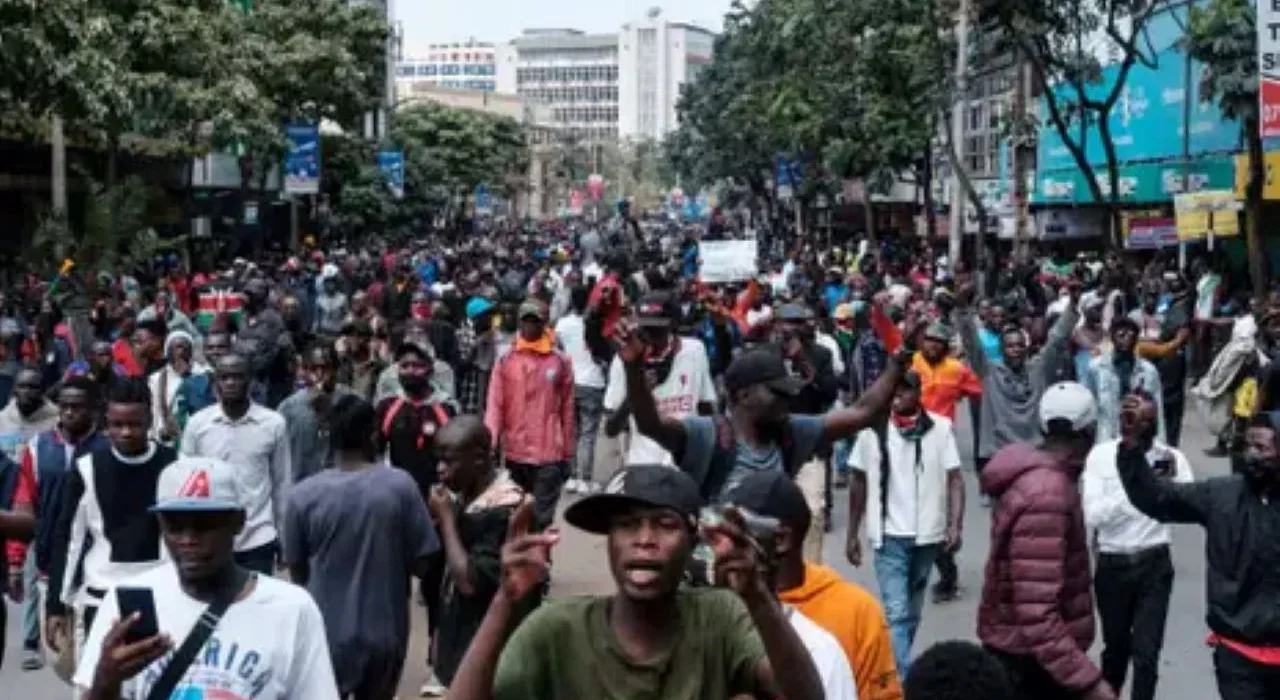
Nairobi showed the force of public action during the 2024 anti-Finance Bill uprising. Young Kenyans organised online, marched through city streets and challenged taxes which threatened households already facing high living costs. Parliament approved the bill. Citizens rejected the decision. President William Ruto later withdrew the legislation after protesters breached Parliament and nationwide unrest shook his administration.
“Listening keenly to the people of Kenya,” Ruto said, before announcing his refusal to sign the bill. Public pressure forced a presidential retreat. Such an outcome explains why insecure governments fear demonstrations. A crowd turns private anger into public pressure. A march gives unemployed graduates, struggling traders and angry taxpayers one national voice.
Kenya paid a terrible price. The Kenya National Commission on Human Rights recorded 50 deaths linked to the 2024 protests by mid-July. Nairobi accounted for 21. The commission also documented hundreds of injuries, arrests and disappearances. Earlier monitoring found police using live rounds, tear gas, batons and water cannon against largely peaceful protesters.
The cycle continued in 2025. KNCHR recorded 19 deaths, 531 injuries, 15 enforced disappearances and 179 arrests after the June 25 demonstrations. During the Saba Saba protests in July, the commission later raised the death toll to 38. Fourteen of 15 post-mortems reviewed at one stage showed gunshot injuries. A 12-year-old girl died while watching television inside her home.
Such figures destroy official claims about restraint. No democratic government should treat public criticism as a battlefield. Violence by individual protesters deserves lawful investigation and prosecution. Police should isolate offenders and protect peaceful participants. Collective punishment converts a constitutional right into a deadly risk.
Kenya also carries a colonial legal inheritance. The Public Order Act entered law in June 1950 under British rule. The statute still regulates public meetings and processions after repeated amendments. Colonial administrators designed public-order controls during an era of African political mobilisation, land grievance and resistance. Independence changed political leadership, yet many state institutions retained the old instinct. Officials still view organised citizens as a threat requiring permission, containment and dispersal.
White settler governments feared demonstrations because African gatherings exposed stolen land, racial rule and forced labour. Liberation leaders once understood public assembly as a weapon of justice. After entering government, many liberation movements began treating the same weapon as sabotage.
Zimbabwe presents a direct warning. Section 59 of Zimbabwe’s Constitution protects peaceful demonstrations and petitions. Yet security forces arrested more than 160 opposition figures, activists, union leaders, students and journalists before the August 2024 SADC summit in Harare. Authorities also detained people at private meetings and disrupted memorial gatherings.
Zimbabwe replaced the colonial Law and Order Maintenance Act with the Public Order and Security Act in 2002, then replaced POSA with the Maintenance of Peace and Order Act in 2019. Names changed. Police discretion and official suspicion survived. A constitutional court had already ruled blanket protest bans arbitrary and disproportionate. Political practice still places citizens under fear.
Uganda followed a similar path in July 2024. Young people planned an anti-corruption march in Kampala after drawing inspiration from Kenya. Authorities banned the rally, deployed soldiers around Parliament and arrested protesters carrying anti-corruption messages. President Yoweri Museveni warned participants against “playing with fire.” Such language exposes a ruler who views public anger as rebellion rather than democratic feedback.
Mozambique offers a deadlier example. Citizens protested disputed 2024 election results and wider social grievances. Amnesty International found unlawful firearm use, mass arbitrary arrests and suppression of information. Civil society monitors recorded around 315 deaths, more than 3,000 injuries and over 4,000 arrests between October 2024 and January 2025. FRELIMO won independence, then a FRELIMO-led state answered public dissent with methods associated with colonial coercion.
Why do African governments fear peaceful protests?
They fear exposure. A march forces unemployment, corruption, poor hospitals, stolen elections and presidential excess into public view.
They fear examples. One successful protest teaches citizens about collective pressure. Kenya’s youth forced withdrawal of a tax bill. Young Ugandans watched. Other African governments watched as well.
They fear losing ownership of liberation history. Former liberation movements often treat independence as a permanent title deed over the state. Leaders present criticism as betrayal. Security institutions defend the ruling party instead of defending the Constitution.
They fear public comparison. Citizens see presidential motorcades, foreign travel, expensive offices and wealthy political families while schools, clinics and water systems fail.
South Africa offers a stronger constitutional model, despite serious police failures. Section 17 protects peaceful and unarmed assembly, demonstration, picketing and petitions. Courts, civil society, unions and media organisations frequently challenge state restrictions. Such institutions give citizens more room to confront authority.
You should ask one question whenever police ban a peaceful march. What truth does the government fear hearing in public?
A confident administration allows citizens to gather. A legitimate president receives petitions. A professional police service protects protesters and non-protesters. A democratic parliament listens before anger reaches its gates.
Africa did not defeat colonial rule so elected leaders would inherit colonial fear. Liberation loses meaning when citizens face bullets for demanding bread, jobs, honest elections or constitutional government.
Nairobi has shown both promise and danger. Kenyan youth proved peaceful mobilisation changes national policy. Police violence proved old state habits still survive beneath modern constitutional language.
African leaders must choose. They should govern citizens who speak freely, or expose themselves as rulers who fear the people from whom all public power comes.