
HARARE, Zimbabwe – A Chinese young man appearing online and claiming Zimbabwean citizenship should force Africa to confront a question many leaders prefer to avoid. Who enters the national family, who approves entry, who controls the process, and where does lawful migration end while foreign political influence begins?
Zimbabwean law permits a foreign national to acquire citizenship. The Constitution states a person who has lived continuously and lawfully in Zimbabwe for at least 10 years holds an entitlement to apply for registration, while Parliament sets additional conditions. A foreign spouse married to a Zimbabwean for at least five years also qualifies to apply. Adoption provides another route for children.
Those provisions mean a Chinese resident does not break the law by becoming Zimbabwean. Race must never replace evidence. Yet citizenship carries far more weight than a passport. Citizenship grants political membership, property rights, voting rights, access to public institutions, and a permanent stake in national decisions.
Zimbabwe reserves presidential eligibility for citizens by birth or descent, alongside age, residence, and voter-registration requirements. The restriction blocks a citizen by registration from seeking the presidency. Lower political offices still deserve close legal and public scrutiny as naturalised citizens join parties, vote, organise, and seek influence.
Africa therefore needs scrutiny, not racial anger. The public deserves proof of lawful residence, good character, a clean immigration record, transparent approval, and genuine allegiance to the country. No investor, mining executive, party donor, or business associate of senior officials should receive citizenship through secret political favour.
The danger lies in the wider pattern surrounding such cases. Chinese companies now occupy major positions in African mining, construction, energy, telecommunications, transport, and manufacturing. China-Africa trade reached a record US$295.6 billion in 2024. In Zimbabwe, Chinese companies invested about US$2 billion in lithium projects from 2021, while firms linked to China secured many of the country’s major lithium assets.
Trade and investment serve African interests when contracts create jobs, transfer skills, pay fair taxes, protect communities, and build local industry. Foreign capital becomes a sovereignty threat when political leaders exchange minerals, land, licences, and influence for loans, private rewards, party support, or protection from public scrutiny.
Political entry has already happened elsewhere. In January 2021, Xiaomei Havard, a native of Henan, China, entered South Africa’s National Assembly through the ANC list. The ANC said she had lived in South Africa since 1994, married a South African citizen, qualified for citizenship, joined the party, and served in ANC structures. The party defended her appointment under South Africa’s constitutional commitment to non-racialism.
Havard’s appointment did not prove wrongdoing. Her case proved something else. A foreign-born citizen, after naturalisation and party advancement, reaches national political office. The ANC Chief Whip defended the appointment, saying her selection “meets constitutional muster and is allowed.”
Africa must understand the long-term meaning. Today, foreign investors seek licences and residency. Tomorrow, naturalised citizens join ruling parties. Later, their children enter Parliament, Cabinet, local councils, security institutions, and policy agencies. Democratic participation by lawful citizens deserves protection. Foreign state influence hidden behind citizenship deserves investigation.
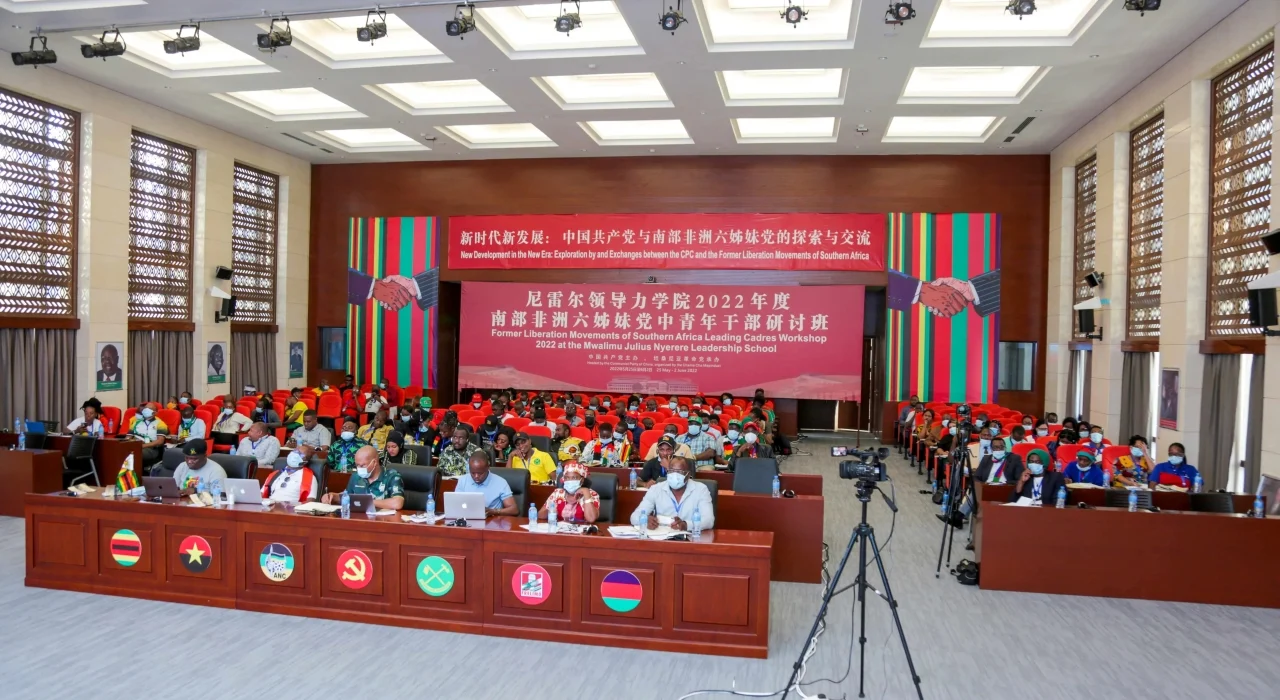
The sharper warning concerns party-to-party power. The ANC, ZANU-PF, CCM, FRELIMO, MPLA, and SWAPO jointly operate the Mwalimu Julius Nyerere Leadership School in Tanzania. The ANC says the school launched in 2022 with support from the Communist Party of China. Chinese political structures support training, exchanges, and ideological programmes involving ruling-party cadres from southern Africa.
ZANU-PF has openly celebrated such programmes. Four senior officials attended a leadership course at the school in 2023. Politburo member Fortune Chasi described the programme as “fruitful” after sessions focused on Africa-China friendship and deeper relations.
No serious African should treat those links as ordinary diplomacy. A foreign ruling party gaining structured access to African liberation movements gains access to future ministers, lawmakers, party strategists, state officials, and policy thinking. The relationship grows more sensitive where ruling parties already blur boundaries between party, government, military, business, and public resources.
Colonisation in the present century does not require foreign soldiers marching into capitals. Control develops through debt, mineral ownership, digital systems, political training, elite relationships, citizenship, land access, and strategic infrastructure. African leaders often sign the documents themselves.
This does not make every Chinese citizen an agent of Beijing. Such thinking would produce injustice and violence. The danger comes from systems without disclosure. Africa needs laws requiring naturalised politicians to declare foreign business links, overseas political memberships, major donations, state contracts, and relationships with foreign governments.
Zimbabwe also needs annual public figures for citizenship approvals. Authorities should disclose numbers, original nationalities, legal routes, refusals, and revocations while protecting private personal records. Parliament should audit exceptional approvals and investigate any case involving mining rights, state tenders, political donations, or national-security sectors.
African states must also disclose foreign funding for political parties and leadership schools. Parliament should review every agreement between an African ruling party and a foreign political organisation. Training content, financing, travel sponsorship, and institutional partnerships should enter the public record.
Citizenship must never become a commercial reward. Strategic land must never move through hidden nominee structures. Mineral licences must never buy political access. Public officials must never place foreign corporate interests above communities facing mine displacement, pollution, low wages, or lost farmland.
Africa already fought colonial rule because earlier leaders lost control of land, labour, law, and trade. A new generation should not inherit another struggle created by today’s silence. The next liberation struggle must defend institutions, economic ownership, transparent citizenship, and accountable government. Racial violence would betray Africa. Democratic resistance, lawful oversight, and national discipline would protect Africa.
The young man in the video might hold citizenship lawfully. Authorities should confirm the process where public interest demands an answer. Africa’s warning starts beyond his face. The continent must watch the contracts, parties, mines, schools, passports, and political networks surrounding foreign influence.
A passport should represent loyalty to an African nation. No passport should provide cover for external power. Africa must act before commercial dependence becomes political control, and before another generation receives a country whose freedom exists only on paper.