
PRETORIA, South Africa – South Africa and the World Bank have signed a US$1.5 billion Development Policy Loan aimed at removing bottlenecks across electricity, freight transport, water, and sanitation. Government presents the agreement as support for faster growth, better services, and job creation. The signature carries weight. Yet citizens should understand what Pretoria signed before political speeches turn borrowed money into imaginary bridges, pipes, rail lines, and jobs.
This agreement does not operate like a normal construction loan tied to one road, dam, port, or power station. A Development Policy Loan supports government finances after agreed policy actions and reforms. National Treasury said the funding also helped South Africa meet its US$3.2 billion foreign-currency borrowing requirement for the 2026/27 financial year. The loan therefore strengthens the budget and reform programme. The agreement does not place US$1.5 billion into a separate account reserved for named infrastructure projects.
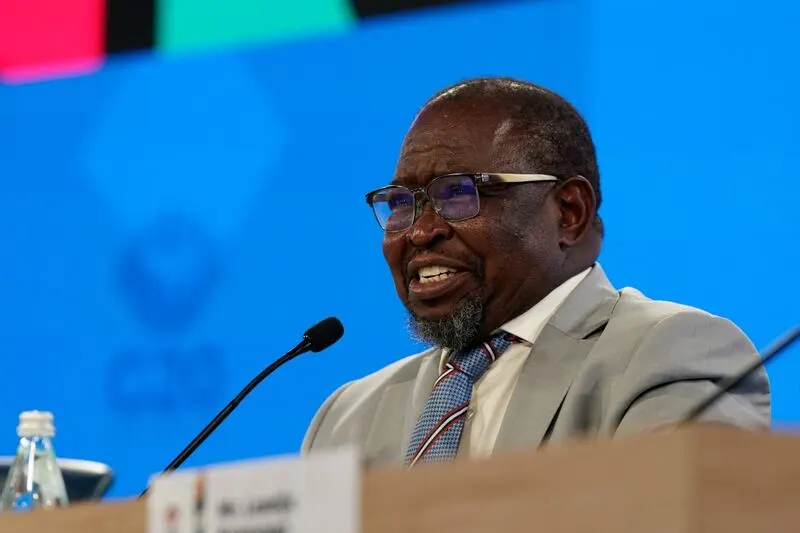
Finance Minister Enoch Godongwana described the programme as reflecting government’s determination “to remove the infrastructure constraints.” His statement identifies the correct problem. South Africa’s electricity system, freight railway, ports, municipal water networks, and sanitation services have restricted production for years. Mines lose export income when trains fail. Factories face higher costs when electricity systems remain unreliable. Households suffer when taps run dry or sewage enters streets.
The loan has a 15-year maturity and a three-year grace period. Interest equals the six-month Secured Overnight Financing Rate plus 1.35 percentage points. Treasury calls those terms favourable and flexible. Such language deserves scrutiny. The rate changes with global borrowing conditions. South Africa also receives dollars while collecting most public revenue in rand. A weaker rand raises repayment costs. Lower initial financing costs do not remove interest-rate or currency risk.
Public debt already places pressure on government choices. The 2026 Budget projects national government debt near 78.9 percent of gross domestic product in 2025/26 before a gradual decline. Debt-service costs consume funds needed for schools, hospitals, policing, maintenance, and local services. A cheaper multilateral loan offers an advantage over expensive market borrowing. Borrowing still requires repayment from future tax revenue.
The World Bank links financing to three reform pillars. The first seeks stronger energy security and competition. Plans include a competitive wholesale electricity market, more private investment in transmission, and 300,000 new household electricity connections by December 2027. South Africa needs new grid capacity because renewable projects often wait years for connections. New generation without transmission leaves power stranded away from homes and industry.
The second pillar targets freight transport. Government wants greater competition among private rail operators and a first port terminal concession in Durban. Freight volumes across rail and ports have risen by more than 50 percent since 2023, according to the World Bank. Recovery from a low base should not invite celebration too early. Exporters need dependable locomotives, secure lines, efficient terminals, predictable schedules, and lower logistics costs every week.
The third pillar covers water and sanitation, a new area for South Africa’s World Bank policy-loan series. Reforms seek stronger regulation, participation by private service providers, and greater autonomy for the National Water Resources Infrastructure Agency. Government must define private participation with care. Private expertise and finance might improve delivery. Poor contracts might produce high tariffs, weak oversight, protected profits, and public losses.
Water reform requires public safeguards. Every contract should publish prices, performance targets, maintenance duties, penalties, ownership details, and service obligations for poor communities. Municipal failure must not become an excuse for secret deals. Private participation should improve water quality and reliability while preserving public accountability.
The World Bank estimates supported reforms will enable the equivalent of almost 600,000 additional and better-paid jobs by 2032. Electricity and transport reforms account for most projected gains. Such figures come from economic modelling, not signed employment contracts. Government should present annual targets, sector results, wage data, and independent audits. Citizens need evidence separating real jobs from forecast jobs.
World Bank official Satu Kahkonen said support now extends “to water and sanitation for the first time.” The expansion recognises a national emergency. Broken pumps, leaking pipes, polluted rivers, failing wastewater plants, and weak municipal billing damage health and business confidence. Repair requires engineers, technicians, procurement discipline, competent managers, functioning laboratories, and regular maintenance. Loans alone produce none of those outcomes.
South Africa plans R1.07 trillion in public-sector infrastructure spending over three years. State-owned companies account for R445.5 billion, provinces R217.8 billion, and municipalities R205.7 billion. Transport and logistics receive the largest share, followed by energy, water, and sanitation. The scale exceeds the World Bank loan many times over. The real challenge involves delivery, not announcement volume.
Corruption and weak project management remain major threats. Medupi, Kusile, rail decline, port congestion, municipal collapse, and repeated water failures already showed how large budgets fail under poor governance. Treasury should publish every policy action linked to disbursement, each responsible institution, deadlines, progress reports, and consequences for missed targets.
Parliament should also track how reforms affect workers and consumers. Private rail access should raise freight capacity without stripping public assets or weakening labour protections. Electricity reform should expand supply without shifting excessive costs toward households. Water reform should improve service without pricing poor families out of a basic human need.
The agreement gives South Africa access to lower-cost foreign finance and external support for structural reform. Such advantages deserve recognition. The agreement also adds debt and places public policy under measurable commitments. Citizens should reject two false positions. Calling every World Bank loan surrender ignores South Africa’s financing needs. Treating every loan as development ignores repayment, policy conditions, and execution risk.
The decisive question concerns results. Will freight move faster? Will ports clear cargo sooner? Will 300,000 households receive electricity connections? Will water interruptions decline? Will sanitation systems protect communities? Will private investment reduce public costs rather than protect private returns? Will nearly 600,000 modelled jobs become recorded employment?
South Africa signed a financing agreement. Government has not yet delivered modern infrastructure. Success requires transparent contracts, firm regulation, skilled public institutions, honest procurement, and published results. Without those controls, US$1.5 billion will increase debt while broken systems continue to restrict growth.
The loan gives reform a financial foundation. Accountability must turn policy into working trains, reliable electricity, clean water, and paid employment.