
FREETOWN, Sierra Leone –
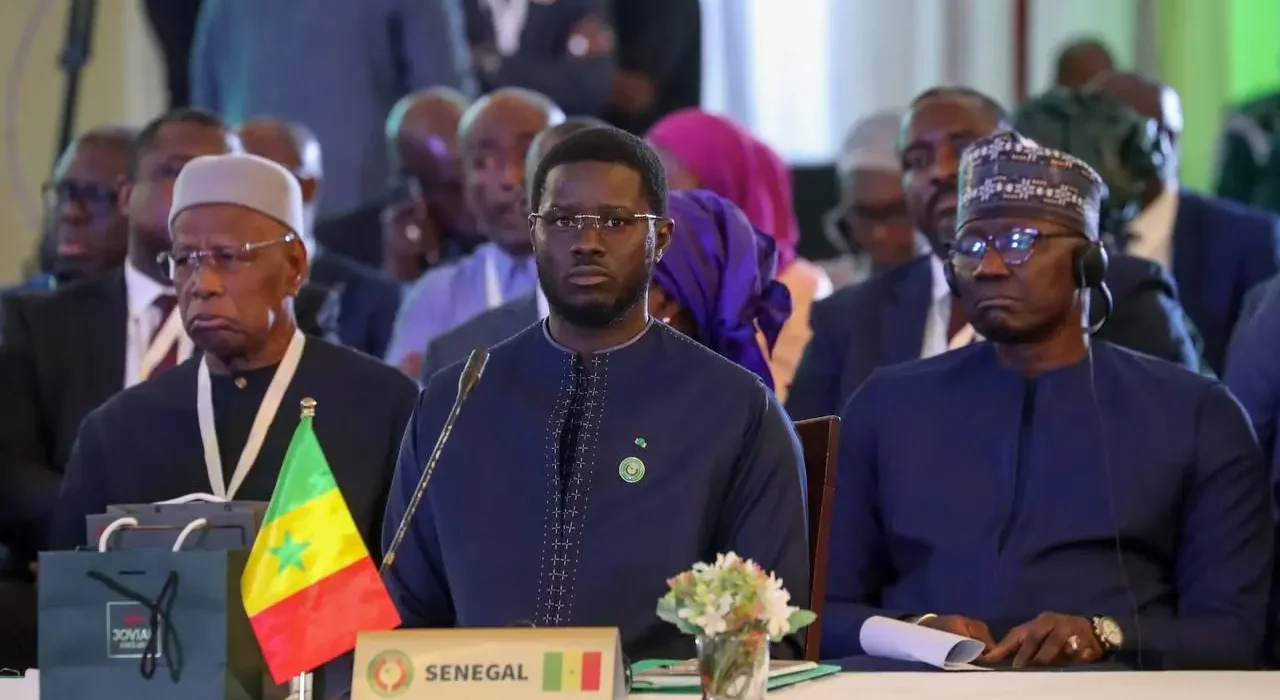
Senegalese President Bassirou Diomaye Faye has assumed the chairmanship of the ECOWAS Authority of Heads of State and Government, taking control of West Africa’s leading regional bloc during its deepest crisis since its creation in 1975. Leaders elected him unanimously at the 69th ordinary summit in Freetown on July 19. He succeeded Sierra Leonean President Julius Maada Bio after Bio completed a one-year term.
Faye now leads a 12-member organisation weakened by the departure of Mali, Burkina Faso, and Niger. The three military-led states left ECOWAS and strengthened the Alliance of Sahel States, known as AES. Their withdrawal reduced the bloc’s geographical reach, divided regional security policy, and weakened decades of work on free movement, trade, diplomacy, and collective action.
His election carries more than ceremonial value. The chair coordinates political direction among heads of state, leads high-level diplomacy, and represents the bloc during major crises. Faye will work alongside a new ECOWAS Commission president, General Birame Diop of Senegal, who assumes office on September 1. Diop previously served as Senegal’s defence minister, armed forces chief, and adviser to the United Nations secretary-general.
Two Senegalese leaders will therefore hold the bloc’s most visible political and executive positions. Such concentration creates opportunity and scrutiny. Senegal now carries unusual influence over regional policy. West Africans will expect results rather than speeches, travel, summits, and communiqués.
Faye enters the role with an advantage. ECOWAS previously appointed him as mediator with Mali, Burkina Faso, and Niger. He visited Mali and Burkina Faso shortly after taking office in 2024 and held direct talks with their military leaders. After meeting Mali’s Assimi Goita, Faye said the Malian position was rigid but “not totally inflexible.” He also warned, “We cannot resign ourselves to watching a tool for integration disintegrate without doing anything.”
Those words now become a performance test. Dialogue with AES should form his first priority, but dialogue must respect political reality. Mali, Burkina Faso, and Niger have built separate institutions, security arrangements, diplomatic partnerships, and travel documents. Public pressure or threats from ECOWAS would strengthen anti-bloc sentiment. Quiet diplomacy, practical cooperation, and respect will offer a better route.
Reintegration should not become the only measure of success. Even without formal return, ECOWAS and AES need agreements covering border movement, trade corridors, electricity links, disease surveillance, aviation, livestock routes, terrorism, organised crime, and humanitarian access. Citizens should not lose livelihoods because presidents disagree.
Security presents the hardest task. Armed groups linked to al-Qaeda and Islamic State have expanded across Mali, Burkina Faso, Niger, and northern Nigeria. Their reach threatens coastal states, mining projects, transport corridors, schools, clinics, farms, and displaced communities. The United Nations warned in July of a devastating human cost and persistent terrorist threats across West Africa and the Sahel.
Faye must push ECOWAS beyond declarations. Intelligence sharing needs secure systems and daily coordination. Border forces need training, equipment, lawful oversight, and local trust. Governments need joint plans against arms trafficking, kidnapping, illicit finance, and extremist recruitment. Military force alone will fail where young people face unemployment, abandoned schools, weak justice, abusive security forces, and absent local government.
ECOWAS has debated a regional counterterrorism force, with earlier estimates placing annual costs as high as US$2.6 billion for a 5,000-member formation. Funding remains a central obstacle. Member states already face debt, poverty, inflation, and pressure on public services. Faye should demand a clear mandate, transparent budget, civilian oversight, and measurable objectives before leaders commit troops and money.
The bloc also faces a credibility problem. ECOWAS often speaks firmly after coups but reacts weakly when elected governments alter constitutions, suppress opponents, weaken courts, or seek extended rule. Citizens see selective enforcement. Military leaders exploit such inconsistency and present themselves as defenders of sovereignty.
Faye should push one democratic standard for soldiers and civilians. A coup violates constitutional order. An elected president who destroys term limits, arrests rivals, or manipulates institutions also damages constitutional order. ECOWAS will regain trust only when principles apply across languages, alliances, and political friendships.
Economic integration needs equal urgency. Border delays, incompatible rules, poor roads, costly transport, and currency barriers continue to restrict regional business. Traders often face harassment and repeated payments despite ECOWAS promises on free movement. Faye should demand public border-performance data, faster customs systems, and firm penalties for officials who obstruct lawful trade.
You should judge his chairmanship through daily outcomes. Does travel become easier? Do traders spend fewer hours at borders? Do coastal states receive earlier warnings about militant movement? Do ECOWAS and AES officers share intelligence? Do citizens hear verified explanations after regional decisions? Does the bloc publish spending and results?
Faye also needs restraint. His election should not become a Senegalese takeover of ECOWAS. General Diop’s appointment increases concern over national concentration. Recruitment, procurement, mediation, and institutional decisions need transparency. Other member states must see shared ownership rather than Dakar directing Abuja from afar.
Bio leaves office after leading ECOWAS through a difficult year marked by insecurity, political instability, illicit arms flows, and the aftermath of the Sahel split. He hosted the Freetown summit and handed responsibility to a leader already familiar with the bloc’s most painful dispute.
Faye’s age, reformist image, and pan-African language will attract hope. Hope alone will not repair ECOWAS. The organisation needs credibility, money, disciplined institutions, open diplomacy, and results felt beyond presidential halls.
West Africa does not need another chairman who issues warnings while borders harden and violence spreads. The region needs a broker who speaks with elected leaders, military rulers, communities, traders, and security officials without treating diplomacy as surrender.
Faye has received the title. His real mandate is harder. He must stop regional separation from becoming permanent hostility, strengthen security without excusing repression, and rebuild an ECOWAS citizens regard as useful.
The Sahel split has already changed West Africa. Faye now has one year to prove division does not have to become collapse.