

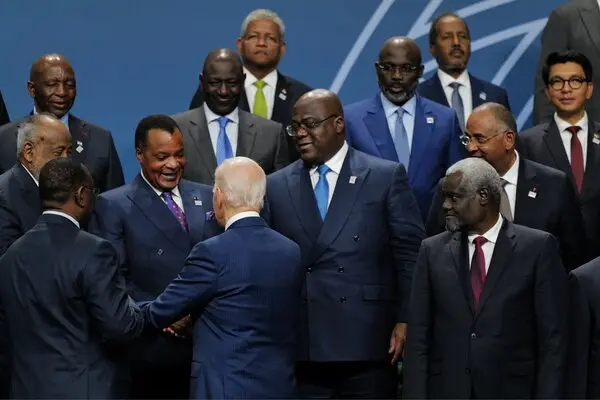
ADDIS ABABA, Ethiopia – African governments still celebrate foreign patrons with a zeal rarely reserved for fellow African states. One capital praises Beijing. Another salutes Moscow. Another seeks approval from Washington, Paris, London, or New Delhi. Leaders describe each relationship as strategic. Citizens often inherit debt, raw-material exports, military dependence, imported finished goods, and little control over national wealth.
Political independence ended direct colonial rule. Flags changed. Anthems changed. Administrators changed. Yet many trade routes, banking systems, military doctrines, legal codes, and extraction contracts stayed tied to former colonial centres. Several governments then replaced old European dependence with new dependence on the United States, China, Russia, India, or Gulf states.
Such conduct turns independence into ceremony. A nation holds elections, raises a flag, and prints passports while foreign capitals shape its debt policy, mining terms, security choices, food supply, digital systems, and diplomatic positions.
Kwame Nkrumah saw the danger in 1963. He warned, “Unless we establish African Unity now, we who are sitting here today shall tomorrow be the victims and martyrs of neo-colonialism.” His warning still confronts every African cabinet which trusts a distant patron more than a neighbouring African state.
Africa must also reject lazy racial thinking. The danger does not come from skin colour. Whiteness does not sign a mining contract. Governments, banks, corporations, and African officials sign contracts. China and India do not become harmless because their people are not white. Russia does not become African because Moscow opposed parts of colonial rule. Foreign power follows national interest.
Your government weakens your country when ministers negotiate alone, hide contracts, accept unfair arbitration clauses, export raw minerals, grant tax holidays without limits, and surrender land or infrastructure without clear public gain. The same danger appears whether the foreign partner comes from Europe, Asia, America, or the Middle East.
Africa needs alliances. Isolation would deepen poverty and slow industrial growth. Yet every alliance must serve African interests. Friendship without equal bargaining becomes dependence. Investment without local ownership becomes extraction. Security support without civilian oversight becomes political control.
Land policy exposes the imbalance in Africa’s foreign relations. Several major powers restrict foreign access to agricultural land, border areas, ports, minerals, and other strategic assets. The United States allows foreign property ownership under federal law, but several states impose restrictions on agricultural land and property near military sites. Russia permits foreign ownership in selected areas while restricting agricultural land and sensitive territories. China does not allow private ownership of land by citizens or foreigners. The state or collectives own the land, while users receive limited land-use rights.
African governments often apply weaker safeguards. They grant foreign companies long leases, mining concessions, farming estates, port access, and control over strategic infrastructure, sometimes through contracts hidden from the public. Communities lose land while receiving poor compensation, few shares, and limited long-term income. The problem is not the nationality or race of the investor. The problem is unequal access and weak African bargaining.
Africa should demand reciprocity. Foreign investors should receive no greater control over African land and strategic assets than African investors would receive in the investor’s home country. Major agreements should protect community ownership, require local equity, publish beneficial owners, limit the duration of leases, and guarantee measurable returns for citizens. Foreign investment should build African wealth, not transfer control of African wealth abroad.
African land policy should start with public interest. Governments should protect communal tenure, publish beneficial owners, cap strategic land holdings, require parliamentary review for major concessions, enforce environmental repair, and block speculative land banking. Foreign investors should lease land under strict conditions rather than gain permanent control over food-producing zones or water sources.
Foreign direct investment should deliver a measurable African return. Africa attracted about 70 billion dollars in FDI during 2025, according to UN Trade and Development. Large sums alone do not prove progress. Leaders must ask where money went, who owned the project, how many local suppliers gained contracts, how much tax entered the treasury, and how much technology stayed after investors recovered profits.
Every major investment agreement should include local equity, value addition, skills transfer, local procurement, tax transparency, environmental duties, labour protections, export limits for unprocessed resources, and enforceable penalties. African states should also negotiate as regional blocs when foreign firms seek strategic minerals, energy corridors, ports, data centres, or farmland.
The deeper failure sits in Africa’s weak alignment with Africa. UNCTAD says intra-African trade accounts for only about 16 percent of total trade. More than half of African imports and exports remain tied to five economies outside Africa. This pattern sends jobs, processing, shipping income, and bargaining strength abroad.
The African Continental Free Trade Area offers a practical route away from such dependence. Its agreement seeks a single continental market, freer movement of goods and services, stronger regional value chains, and a common African voice in global negotiations. Trading started in 2021, yet border delays, incompatible rules, weak roads, currency costs, and political suspicion still slow progress.
AfCFTA Secretary-General Wamkele Mene reported intra-African trade worth 220.3 billion dollars in 2024, up 12.4 percent from the previous year. He said growth in machinery, vehicles, food products, and chemicals showed movement toward industrial diversification. Africa should treat this shift as a security priority, not a trade conference slogan.
You should demand African procurement before foreign procurement where quality and price meet fair standards. Your pension funds should finance African infrastructure. African banks should support African manufacturers. African governments should buy medicines, buses, fertiliser, food, uniforms, software, and construction materials from regional producers before sending scarce foreign currency abroad.
Africa also needs common rules for foreign bases, strategic minerals, digital data, and national debt. One state negotiating alone faces pressure. A bloc representing hundreds of millions of consumers holds leverage.
The continent does not need new masters with different flags. Africa needs partners who accept African ownership, African labour, African law, African value addition, and African public benefit.
True independence starts when African states trust one another enough to trade, build, finance, defend, and negotiate together. Until then, every celebration of a distant patron will expose the same old weakness beneath a new diplomatic slogan.