

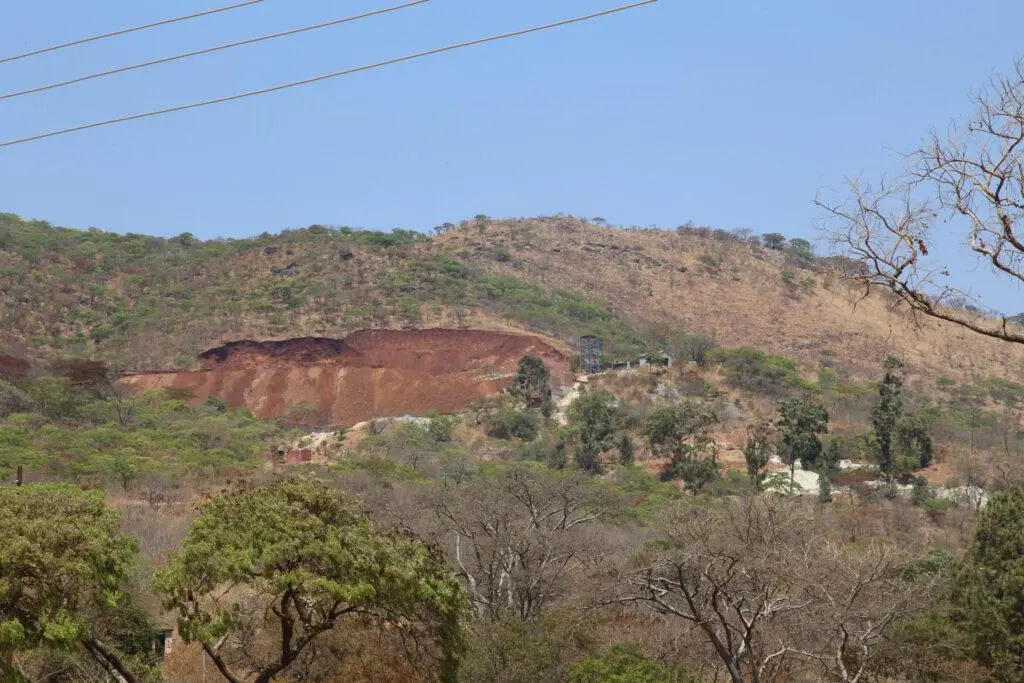
HARARE, Zimbabwe – Mining crews are cutting into Zimbabwe’s mountains, damaging river systems and leaving communities exposed to dust, toxic chemicals, unstable ground and abandoned pits. Regulators keep producing directives. Excavation continues.
From Penhalonga and Odzi in eastern Zimbabwe to Mazowe, Boterekwa, Mutoko and Christmas Pass, residents and environmental groups have raised repeated complaints about Chinese-owned companies, local operators and artisanal miners. The central issue concerns a government system which approves projects but struggles to control their consequences.
Zimbabwean commentator Ali Naka brought the dispute back into national debate after demanding answers from Environmental Management Agency Director-General Aaron Chigona.
“Why are journalists not reporting on this carnage?” Naka asked after saying he had witnessed operations around Penhalonga and Odzi.
His question reaches far beyond Zimbabwe.
A Ghanaian who has watched illegal gold mining pollute the Pra, Ankobra and Birim rivers will recognise this crisis. Ghana calls illegal small-scale mining galamsey. Zimbabwe often speaks of riverbed mining, gold panning or makorokoza. The names differ. The poisoned water, damaged farms and official excuses look familiar.
EMA serves as Zimbabwe’s environmental regulator, much like Ghana’s Environmental Protection Authority. Zimbabwe’s Constitution protects every person’s right to an environment free from harm to health or well-being. Section 97 of the Environmental Management Act requires mining projects to secure an Environmental Impact Assessment certificate before starting work.
Zimbabwe does not lack legal protection. Zimbabwe lacks consistent enforcement.
Christmas Pass provides direct evidence. The mountain range forms part of Mutare’s identity and stands above residential communities and Hillcrest School. In April, the Centre for Natural Resource Governance inspected an open-cast gold site and reported extensive removal of vegetation and topsoil along a steep gradient.
CNRG warned about mudslides and debris flows during heavy rain. The organisation later cited an EMA letter dated March 30, 2026, directing Culverhouse Investments, operator of Toronto Mine, to stop new excavations and complete rehabilitation by April 30.
Residents reported continued excavation and machinery after the deadline.
“A rehabilitation order cannot lawfully become a licence for continued commercial extraction,” CNRG said.
EMA must explain whether officers returned to the site, what inspectors recorded and which penalty followed any breach. A directive without enforcement protects nobody.
Penhalonga and Odzi present an even greater public-health threat.
A June 2026 investigation documented miners using mercury along the Mutare River. The river feeds a water system serving about 225,000 Mutare residents. Reporters also recorded mercury use along the Odzi River.
The same investigation cited a United Nations Environment Programme finding showing mercury use at 96 percent of Zimbabwe’s artisanal and small-scale gold-processing sites. EMA estimates those operations consume more than 50 tonnes of mercury each year.
Traders export the gold. Communities retain contaminated rivers, unsafe soil and long-term health risks.
At Premier Estate, a parliamentary petition accused Xu Zhong Jin Investments of causing siltation along the Mutare River, with downstream consequences for the Odzi and Save rivers. The petition also accused Sino Africa Hui Jin Holdings of unsafe blasting and environmental damage. Both companies deserve an opportunity to answer the allegations publicly.
Government later stopped illegal alluvial mining at Premier Estate. A shutdown does not rehabilitate land. Authorities must close pits, test water, stabilise riverbanks and force responsible operators to fund repairs.
Boterekwa in central Zimbabwe shows the same regulatory weakness. Investigations have documented open-cast mining, damaged roads, dust, cracks in the ground and complaints about blasting. Shurugwi Mayor Fanuel Machiya said Chinese company Chengxi resisted several official requests for engagement. Chengxi representatives said the company supports projects in education, agriculture and health.
Community projects do not cancel environmental duties. A donated classroom does not repair a polluted river. A company must meet both obligations.
Mutoko provides another warning. For decades, companies have extracted black granite while nearby communities report abandoned pits, cracked houses, deforestation, dust and lost farmland. Research across five mines identified soil erosion, biodiversity loss, siltation, damaged sacred sites and wildlife displacement.
Ghanaians understand this exchange. Ghana produces gold, yet galamsey communities face polluted water and damaged cocoa farms. A government-backed study released in 2025 found mercury readings in soil from some mining areas reached 134 times recognised safe levels. Ghana later banned mining inside forest reserves.
Zambia provides an even more severe example. In February 2025, a waste dam at the Chinese-owned Sino-Metals Leach Zambia copper operation failed. About 50 million litres of acidic and metal-laden waste entered the Kafue river system. Pollution killed fish, destroyed crops and forced authorities to interrupt water supplies to Kitwe.
Zimbabwe should respond before a similar event kills people or removes drinking water from a major city.
Nationality does not decide legal responsibility. Evidence does. Chinese companies appear in numerous documented disputes, but African officials issue licences, approve environmental assessments and inspect operations. Local political actors often control access to land. Artisanal miners also pollute rivers with mercury.
Foreign companies exploit weak enforcement. Local officials create and protect the weakness.
Chigona previously faced criminal abuse-of-duty allegations involving approval of an environmental assessment for a Chinese-linked housing project on a Harare wetland. A court removed him from remand in March 2025 after prosecutors failed to begin a trial. The court recorded no conviction. The allegation concerned a separate project.
Public trust now requires full disclosure. EMA should publish every EIA certificate, inspection report, rehabilitation order, fine and compliance deadline connected to the sites Naka listed. The Mines Ministry should identify each licence holder and beneficial owner. Parliament should release findings from petitions involving the Mutare and Odzi rivers.
Journalists have reported parts of this story. CNRG, local publications and investigative reporters have documented individual sites. The deeper failure involves fragmented coverage and limited follow-up.
Newsrooms across Africa must treat environmental orders as continuing stories. Reporters should return after each deadline. They should compare satellite images, obtain water tests, search company ownership records and interview regulators, workers and affected residents. A viral video should begin an investigation rather than replace one.
A reader in Ghana, Zambia, Kenya or the Democratic Republic of Congo should understand Zimbabwe’s crisis as part of a continental accountability problem. Governments invite investment, communities carry environmental costs and regulators respond after damage spreads.
Mining revenue loses value when governments spend public money repairing private damage. Employment figures offer no defence for poisoned water, unsafe homes or destroyed farmland.
Chigona and EMA must now answer with documents and enforcement. Zimbabweans deserve the names of every operator, every approving official and every person who ignored a breach. Africa’s minerals belong beneath African soil until extraction protects African lives.