
CARDIFF, Wales – Britain enters a defining constitutional week as the pro-independence first ministers of Scotland, Wales and Northern Ireland prepare to meet in Cardiff on Monday and sign a cooperation agreement focused on self-determination, economic policy, energy and relations with Europe.
Scottish First Minister John Swinney, Welsh First Minister Rhun ap Iorwerth and Northern Ireland First Minister Michelle O’Neill plan to hold talks at St David’s Hotel in Cardiff Bay. Sinn Féin president Mary Lou McDonald also plans to attend. Reports say the leaders will sign a memorandum of understanding committing their parties to closer cooperation and urging Westminster to prepare for constitutional change. The gathering places three nationalist movements around one table at a moment without precedent in modern British politics.
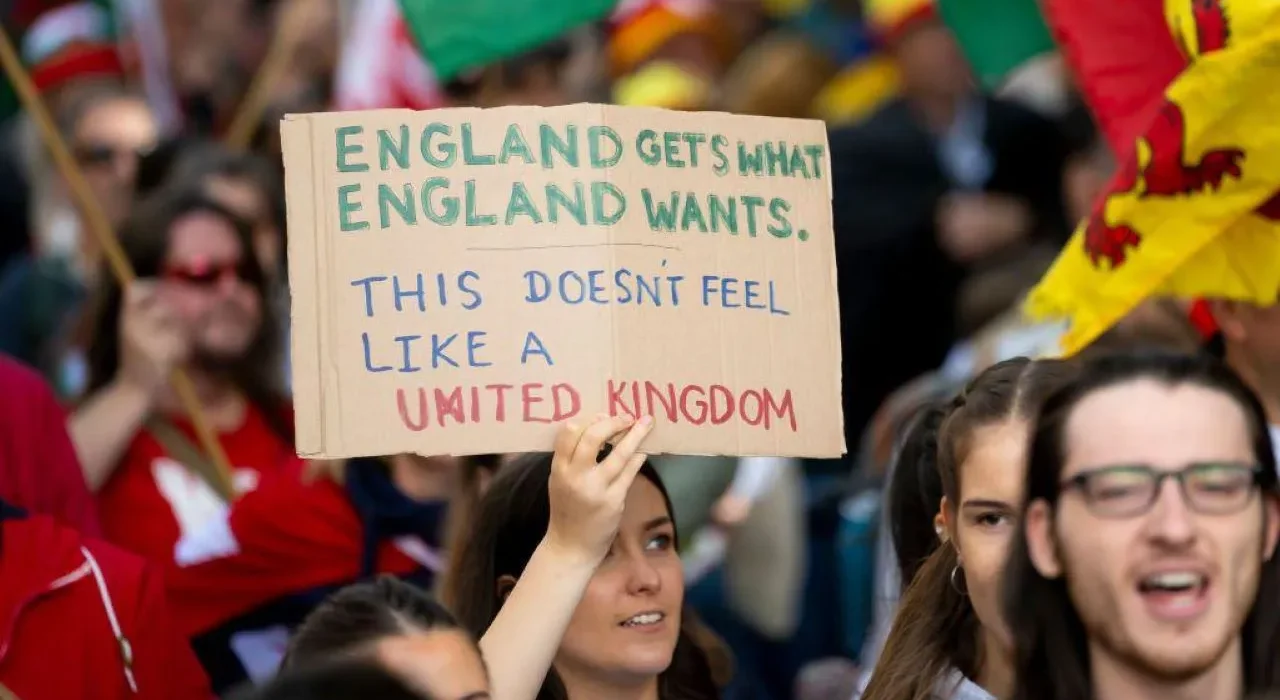
The political symbolism carries weight. Scotland, Wales and Northern Ireland now all have first ministers whose parties support leaving the United Kingdom in their respective constitutional forms. Swinney’s Scottish National Party seeks an independent Scotland. Plaid Cymru supports Welsh independence. Sinn Féin seeks Irish reunification. Nationalists now lead the three devolved governments outside England for the first time.
Swinney has already increased pressure on Prime Minister Andy Burnham. Ahead of the Cardiff meeting, he said “the momentum behind serious constitutional change is undeniable,” and argued Westminster should prepare for a “post-UK future.” His language moves beyond another routine disagreement between Edinburgh and London. Swinney wants Westminster to accept a formal route through which Scottish voters would decide their constitutional future.
Burnham created fresh political tension during Prime Minister’s Questions after comparing Scotland’s position with Northern Ireland. He told MPs the trigger for a future vote involved public support and described Scotland as facing “exactly the same situation” as Northern Ireland. Downing Street later stressed the government had not changed its opposition to another Scottish independence referendum. The episode gave nationalist leaders new material for their argument over democratic consent.
Northern Ireland operates under a different constitutional framework. The Good Friday Agreement provides a legal route toward a border poll if the Northern Ireland Secretary believes a majority appears likely to support Irish reunification. Scotland has no equivalent automatic mechanism. Swinney wants London to turn democratic support into an agreed legal pathway rather than leave referendum authority almost entirely under Westminster control.
The Telegraph reports four broad areas in the Cardiff agreement: the economy, energy, Europe and international cooperation, and self-determination. The three parties also support closer European ties. SNP and Plaid Cymru favour future European Union membership for independent Scotland and Wales, while Sinn Féin seeks Northern Ireland’s reunification with the Republic of Ireland, an EU member.
For Wales, the constitutional argument carries a different political tempo. Ap Iorwerth became First Minister after Plaid Cymru’s breakthrough in the 2026 Senedd election. He wants more fiscal authority, policing and justice powers, Crown Estate revenues and a funding settlement he regards as fairer for Wales. His government has also pushed reform of the Barnett funding formula and greater borrowing powers.
Yet ap Iorwerth rejects portrayals of his agenda as a simple plot to destroy Britain. He previously said, “I’m not driven by wanting to break up the UK. I’m driven by wanting to build up Wales.” His position matters because support for greater Welsh autonomy and support for full independence do not always mean the same thing. Monday’s declaration therefore carries political force without producing an immediate path to Welsh separation.
Northern Ireland presents another important qualification. O’Neill leads Sinn Féin and openly supports reunification, but Northern Ireland’s devolved system also includes DUP deputy First Minister Emma Little-Pengelly. The two offices hold joint and equal authority under the power-sharing settlement. Monday’s nationalist cooperation therefore does not represent a unified Northern Ireland Executive position. O’Neill attends as a Sinn Féin leader and First Minister within a divided constitutional system where unionist representation retains major institutional weight.
O’Neill has used stronger language about the Union. Earlier this year she said, “The Union doesn’t work. People deserve better.” She described self-determination and independence as alternatives to Westminster rule and pledged cooperation with Swinney and ap Iorwerth. Sinn Féin’s long-term objective remains a referendum on Irish unity.
For Burnham, the challenge now reaches beyond Scotland. Previous British governments often treated constitutional disputes as separate files, Scottish independence in Edinburgh, Welsh devolution in Cardiff and Irish reunification in Belfast. Monday’s meeting seeks to connect those arguments politically. Three nationalist governments now have an incentive to coordinate pressure on London, share policy arguments and present Westminster centralisation as a common problem.
Unionists will argue the meeting overstates nationalist mandates and risks shifting attention away from public services, growth and household pressures. Scottish voters rejected independence in 2014. Wales has never held an independence referendum. Northern Ireland’s constitutional status rests on consent under the Good Friday Agreement. No declaration signed in Cardiff changes any of those legal facts overnight.
Yet dismissing the meeting as theatre would also miss the shift underway. The Scottish Parliament, Senedd and Northern Ireland institutions have created distinct political centres with their own electorates, policy agendas and national debates. Devolution gave those institutions authority. Nationalist parties now seek to turn devolved authority into arguments for sovereignty.
Burnham took office promising deeper devolution and practical cooperation with the devolved governments. Downing Street said in July he wanted partnership based on common ground while rejecting further constitutional referendums. His government now faces nationalist leaders asking a more difficult question. If Westminster supports devolution and democratic choice, who decides when demands for independence deserve a vote?
Monday will not break up the United Kingdom. No signature in Cardiff dissolves a three-century political union, creates an independent Wales or Scotland, or reunifies Ireland. The meeting does something politically significant instead. The meeting places three independence movements into coordinated discussion at government-leader level and gives their constitutional campaigns a shared platform.
For audiences across Africa, where borders, sovereignty and post-colonial state structures remain central political questions, Britain’s debate offers an unusual reversal of historical perspective. A state which once governed territories across the globe now faces growing internal arguments over who should govern Scotland, Wales and Northern Ireland.
The central question is no longer whether constitutional pressure exists. The question is whether Westminster manages such pressure through negotiated democratic routes or allows repeated refusal to deepen nationalist grievance.
Cardiff will provide no final answer on Monday. Yet the photograph of Swinney, ap Iorwerth and O’Neill standing together will carry a message few British prime ministers have faced before. Three governments inside the United Kingdom now have nationalist leaders who openly envisage futures outside the Union.