
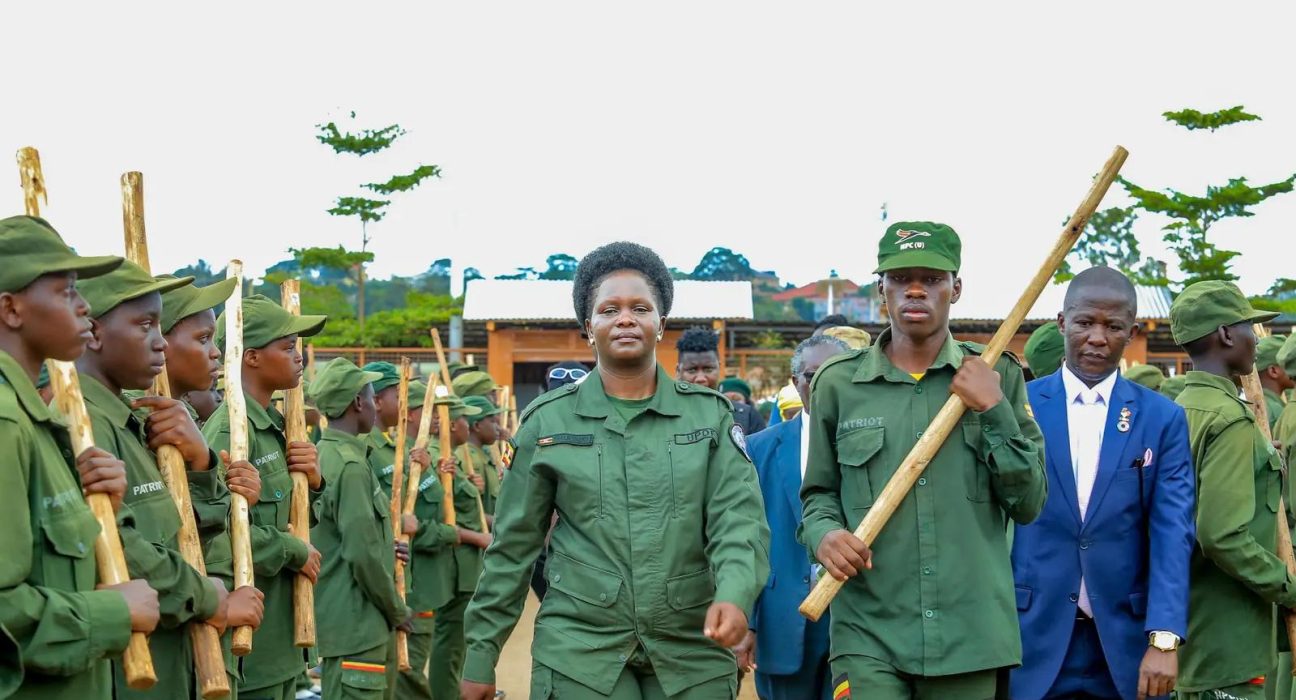
KYANKWANZI, Uganda – More than 1,000 Ugandans who fled unrest in South Africa have completed a 15-day state-run programme combining counselling, medical care, civic instruction, physical training, and military-style drills at the National Leadership Institute in Kyankwanzi.
The programme enrolled 1,030 returnees after Uganda organised free repatriation flights from South Africa. Official figures list 438 men, 261 women, and 331 children from newborn age to 16 years. Government accounts later described 738 adults and 292 children, creating a small numerical inconsistency requiring public clarification.
Videos posted by National Secretariat for Patriotism Corps Commissioner Hellen Seku show marching formations, fitness sessions, physical combat exercises, patriotic chants, and classroom instruction. Participants also received health assessments and treatment. The first cohort passed out before President Yoweri Museveni on July 19.
The images have drawn attention across Africa because the returnees arrived after losing jobs, businesses, homes, and personal security during anti-immigrant unrest in South Africa. Some returned with children. Others carried grief after three Ugandans reportedly died during the violence. Uganda says many participants reached Kyankwanzi traumatised and uncertain about their future.
Seku insists the programme serves national recovery rather than party politics. “For us as patriots, we are non-partisan,” she said. Returnees chanted, “We are happy to be Ugandan, and Uganda is our motherland.” Her office says lessons covered patriotism, national identity, leadership, wealth creation, health, security, agriculture, responsible social media use, and government development programmes.
Museveni used the graduation ceremony to challenge the belief prosperity exists only abroad. “I welcome you from danger, and I thank God you have returned safely,” he told the gathering. He later asked why Ugandans leave a resource-rich homeland in search of uncertain employment elsewhere.
His government pledged 2 billion Ugandan shillings for the group, alongside 2 million shillings for each household head to cover transport home. Officials also asked returnees to document lost businesses and property while authorities assess further support. Three bereaved families received 10 million shillings each.
The package gives the programme economic substance beyond marching and speeches. Many returnees possess skills in construction, automotive engineering, carpentry, tailoring, metal fabrication, leather work, information technology, and property services. Uganda now faces a direct test. Public money must help those skills produce income, registered businesses, apprenticeships, and local jobs.
A military-style setting presents both benefits and questions. Structured days, exercise, group activity, medical attention, and counselling might restore routine after displacement. NALI also provided identity registration, driving-permit renewal, business registration, and referrals for specialist treatment. Organisers created a temporary nursery for more than 290 children while parents attended lectures.
Yet trauma recovery needs qualified mental-health care, privacy, informed participation, and long-term follow-up. Drills should never replace professional counselling. Patriotic education should never become political pressure. Adults who escaped hostility abroad deserve freedom to question government policy at home without being labelled disloyal.
The inclusion of hundreds of children requires special protection. Official reporting states children were enrolled within the wider programme, while a nursery served younger participants during adult lectures. Government should explain which activities involved minors, which specialists supervised them, and how authorities assessed emotional wellbeing. Babies and school-age children require care shaped around age, safety, education, and family stability, not adult political instruction.
Uganda also needs transparent rules for the promised financial support. Authorities should publish eligibility standards, payment dates, beneficiary records, complaint procedures, and audit findings. Returnees lost different amounts and face different needs. A former business owner, an unemployed worker, a widow, and a family with several children require distinct recovery plans.
Museveni urged returnees to use the Parish Development Model, Emyooga, farming, manufacturing, services, and digital work. Such advice gains value only when credit reaches people quickly, land access stays fair, markets exist, electricity works, and officials avoid demanding political loyalty.
The government deserves credit for organising flights, accommodation, food, medical screening, identity services, and financial support. Uganda Airlines transported all 1,030 returnees without charge. Officials also maintained diplomatic contact with Pretoria and registered more than 600 Ugandans who stayed in South Africa.
Yet repatriation does not erase responsibility in South Africa. Ugandans with valid papers also reported threats and losses. A Ugandan lawmaker challenged claims suggesting attacks mainly targeted undocumented migrants, citing lawful entrepreneurs among those forced home. Pretoria must investigate violence, protect legal residents, prosecute attackers, and address immigration through state institutions rather than street intimidation.
South Africans hold a legitimate right to demand lawful immigration, effective borders, fair service delivery, and action against crime. No grievance gives private groups authority to raid homes, remove patients from clinics, threaten traders, or punish entire nationalities. African governments should support lawful enforcement while rejecting collective blame.
Kyankwanzi now stands as more than a training site. The institute has become the first stop in a national reintegration experiment. Success will not be measured by uniforms, salutes, chants, or a presidential ceremony. Success will be measured six months later through stable homes, working businesses, school attendance, mental health, and family income.
Uganda should publish progress reports for every funded project. District officers should visit returnees after resettlement. Banks, cooperatives, technical institutes, and private firms should help convert experience gained abroad into productive work. Returnees should also help design the programme instead of receiving every decision from officials.
The South Africa exodus exposed a painful African failure. Citizens left one African country after hostility and returned home through emergency evacuation. Uganda answered with rescue, rehabilitation, and patriotic mobilisation. The next duty carries greater weight.
A country proves loyalty to returning citizens through opportunity, justice, and dignity. Uganda has marched the returnees across a parade ground. Government must now walk beside them through the harder journey of rebuilding their lives.