
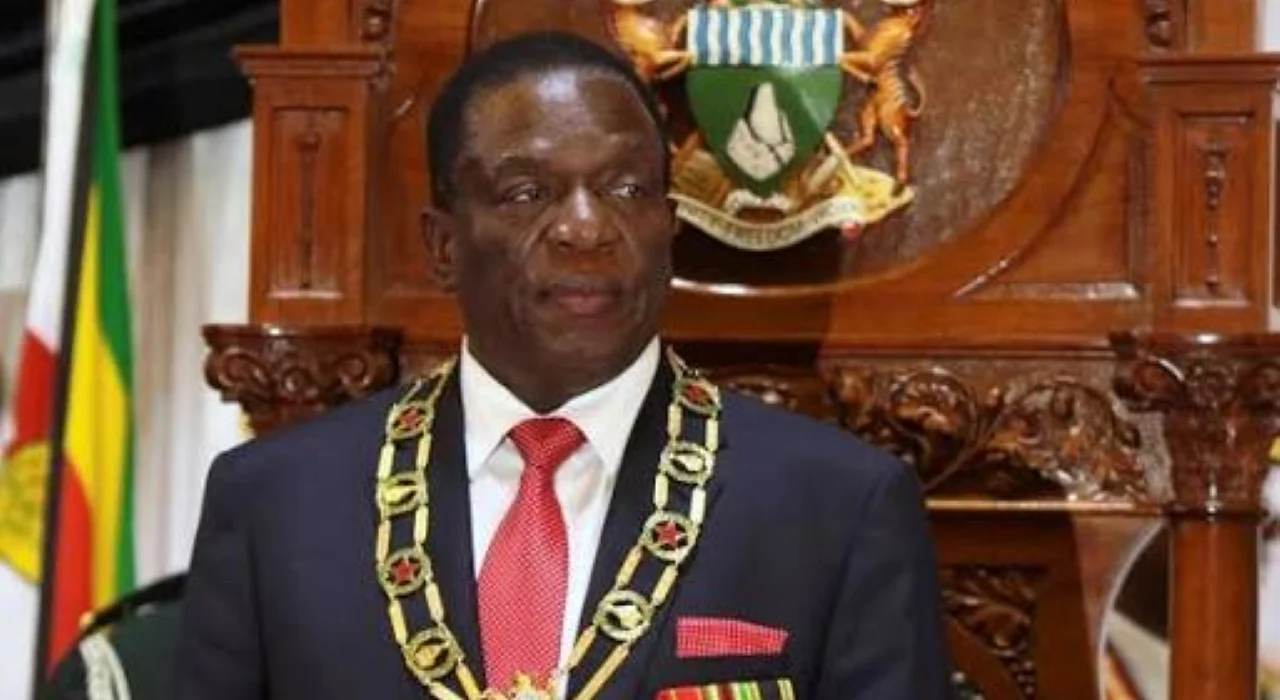
HARARE, Zimbabwe – President Emmerson Mnangagwa will open the Fourth Session of Zimbabwe’s 10th Parliament at the New Parliament Building in Mt Hampden today, placing legislation, economic policy and constitutional governance at the centre of national attention.
The joint sitting of the National Assembly and Senate starts at 2pm. Mnangagwa will also deliver the 2026 State of the Nation Address under Section 140 of the Constitution. Speaker of the National Assembly Jacob Mudenda announced the programme through General Notice 1866 of 2026.
Mudenda said, “His Excellency, the President of Zimbabwe, Dr Emmerson Dambudzo Mnangagwa on Tuesday, 29th September, 2026, 2 pm will address a joint sitting of the Senate and the National Assembly.” He said the President will set out Government’s legislative agenda for the Fourth Session before delivering the State of the Nation Address.
The address arrives at a politically important point for Zimbabwe. Parliament enters a new session after a Third Session dominated by constitutional change, economic legislation, ministerial oversight and public debate over institutional accountability.
During the previous session, Parliament passed Constitutional Amendment Act Number 3. Official parliamentary figures recorded 226 votes in favour and 41 against in the National Assembly. The Senate recorded 75 votes in favour and four against. The voting pattern showed support extending beyond ZANU PF, with some CCC legislators also backing the measure.
The amendment process drew political attention because constitutional rules define the balance between executive authority, Parliament and voters. Supporters presented the changes as part of governance reform. Critics raised concerns around executive power, electoral safeguards and the future design of presidential authority. Those competing positions remain part of Zimbabwe’s wider political debate.
Today’s speech gives Mnangagwa a formal platform to outline the next legislative programme. Parliament then carries responsibility for scrutiny, committee examination, debate and voting on Bills flowing from the agenda.
The previous parliamentary session produced 54 portfolio committee reports. Sixteen focused on quarterly budget performance across Government ministries. Committees also handled public petitions and other oversight work. Parliament passed legislation covering insurance and pensions, medical services, examinations, tourism, occupational safety and health, climate policy and institutional hosting arrangements.
For voters, the central issue now concerns delivery. A legislative programme matters only when ministries implement laws, Treasury funds approved programmes, regulators enforce rules and Parliament follows expenditure.
Economic policy will command close attention during SONA. Zimbabwe continues to face pressure around household incomes, electricity supply, public services, business costs, currency confidence and employment. Government has linked its policy programme to Vision 2030 and an upper middle-income economy target.
The opposition and civil society will focus on whether today’s programme offers measurable commitments. Parliamentary accountability depends on more than speeches. MPs hold authority to question ministers, examine expenditure, investigate public administration and review proposed laws.
The Constitution gives the President a specific annual duty to address Parliament on the state of the nation. Section 140 also requires the President to set out the Government’s legislative agenda when opening a parliamentary session. Those provisions place SONA inside Zimbabwe’s constitutional architecture rather than treating the occasion as a party event.
Political attention will also fall on constitutional governance following the recent amendment process. Zimbabwe has experienced sustained debate around presidential tenure, electoral arrangements and institutional independence. Any new legislative proposals touching those areas will draw close examination from political parties, legal groups, churches, civic organisations and ordinary voters.
Parliament itself faces scrutiny. Zimbabweans often judge legislative performance through attendance, quality of debate, committee work and the willingness of MPs to question the executive. The Fourth Session gives legislators another opportunity to demonstrate oversight through evidence, public hearings and budget scrutiny.
The Committee for the Future also begins the new session after its creation during the previous parliamentary cycle. Parliament established the body to examine emerging issues and prepare policy responses. Its work gives legislators another forum for studying long-term risks involving technology, demographic change, climate, public finance and national development.
Mnangagwa’s speech follows his recent international engagements, including the United Nations General Assembly in New York. Government supporters expect the President to connect foreign policy commitments with domestic economic priorities. Opposition figures will examine whether international agreements translate into investment, public services, jobs and stronger institutions.
You should watch the legislative list closely. The names of proposed Bills will provide a clearer measure of Government priorities than broad political language. Bills touching taxation, elections, public finance, devolution, local government, mining, energy or social protection would carry direct consequences for households and businesses.
You should also watch timelines. Zimbabwe has often faced delays between policy announcements, Bills, regulations and implementation. Parliament’s committee system offers one route for tracking those gaps. Public hearings also give citizens a formal path into legislative debate.
The State of the Nation Address also arrives before future electoral contests intensify political positioning. Both governing and opposition politicians will use parliamentary debates to define their records and policy arguments. Neutral scrutiny therefore matters. Claims from every political camp require comparison with budgets, laws, implementation data and audited outcomes.
Mudenda’s notice gives today’s proceedings a clear constitutional structure. Mnangagwa opens the session, sets out the legislative agenda and delivers SONA. Parliament then moves from ceremony into legislative work.
Zimbabweans will hear many promises and political interpretations after the speech. The stronger test will come later. Which Bills reach Parliament. Which committees investigate them. Which budgets support them. Which targets receive deadlines. Which ministries report results.
Those questions will shape the practical meaning of the Fourth Session.