

PRETORIA, South Africa – South Africa is placing energy infrastructure at the centre of a wider industrial revival while deepening economic cooperation with China around investment, new energy technology and manufacturing.
The scale is enormous. South Africa’s Integrated Resource Plan 2025 projects about R2.23 trillion in electricity investment through 2039 and roughly 105,000 megawatts of new generation capacity. The programme includes solar, wind, battery storage, gas and nuclear power, alongside major grid expansion needed to connect new projects.
China has not pledged R2.2 trillion directly to South Africa. The R2.2 trillion figure represents South Africa’s projected national energy investment requirement. Chinese involvement sits inside a broader economic partnership covering investment and new energy cooperation, alongside direct engagement with Chinese companies and investors.
This distinction matters.
South Africa is not handing Beijing control of a R2.2 trillion programme. Pretoria is building a national energy plan and wants Chinese capital, technology and manufacturers to participate inside a much larger domestic investment drive.
In February, Trade, Industry and Competition Minister Parks Tau and Chinese Commerce Minister Wang Wentao signed a framework agreement for an Economic Partnership for Shared Prosperity. The agreement covers trade, investment, new energy cooperation and multilateral engagement. Pretoria says the framework seeks greater Chinese investment while expanding South African exports into China.
Transmission presents one of the hardest obstacles.
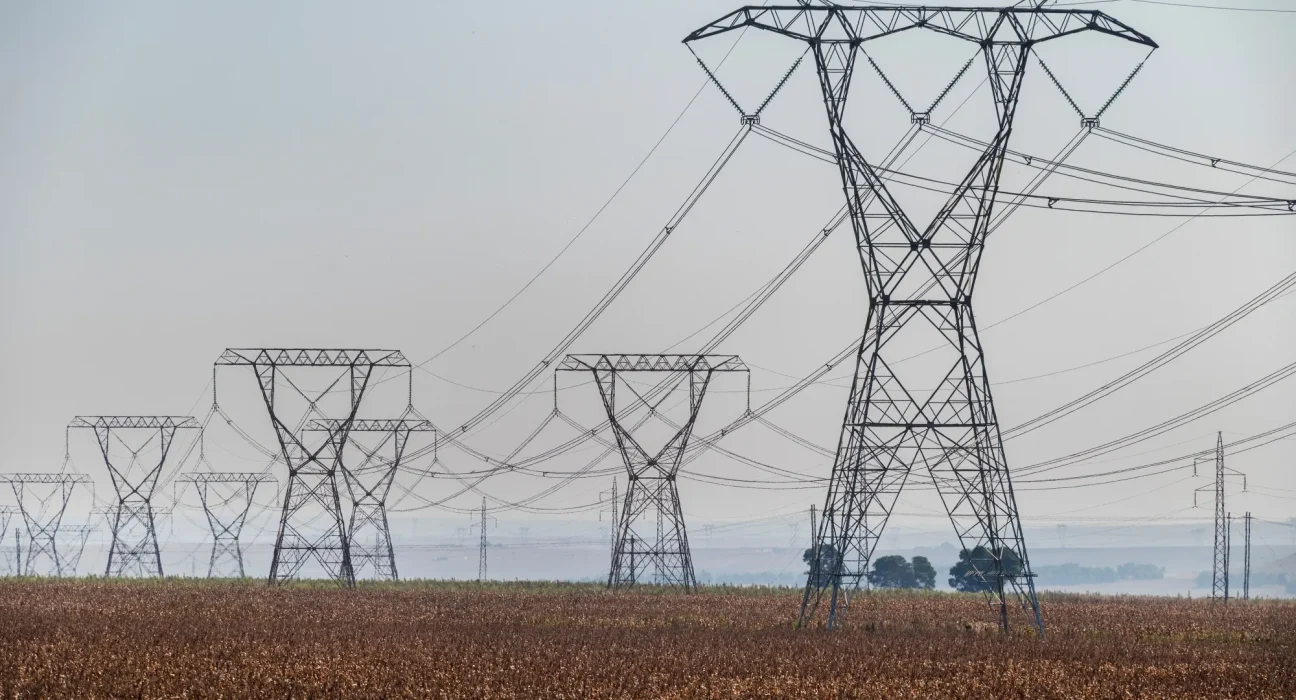
South Africa needs thousands of kilometres of new high-voltage lines because many of the strongest wind and solar resources sit far from available grid capacity. InvestSA says the country requires about 14,200 kilometres of extra-high-voltage transmission expansion. Current grid constraints already delay renewable projects across important generation regions.
Generation without transmission solves little.
A solar farm producing cheap electricity in the Northern Cape has limited national value when grid congestion blocks delivery toward Johannesburg, Durban or major industrial centres. New lines, substations, transformers, switchgear and control systems therefore form the backbone of the energy expansion.
Pretoria wants more of those components manufactured inside South Africa.
Government strategy now places localisation beside electricity expansion. South Africa’s Renewable Energy Masterplan seeks domestic manufacturing across renewable energy and battery storage value chains. The plan links power procurement with jobs, industrial capacity and local supply chains.
The import gap shows the opportunity.
InvestSA reports South Africa imports around 90 percent of inverters and 60 percent of transformers. Large renewable projects also require cables, switchgear, protection systems, battery components and control equipment. Every imported component sends part of the energy transition’s industrial value overseas.
Pretoria wants to change this model.
Chinese companies dominate large sections of global solar, battery and power-equipment manufacturing. South Africa therefore sees an opportunity to attract factories instead of purchasing finished equipment indefinitely.
The strategy carries clear economic logic.
Chinese manufacturers establishing transformer, battery, inverter, solar equipment and cable production inside South Africa would gain access to a large domestic infrastructure programme. South African factories would gain potential access to growing African demand through regional trade arrangements.
The Department of Trade, Industry and Competition already points toward local manufacturing as a strategic objective. ACTOM’s Pretoria West facility now produces large power transformers, high-voltage equipment and lithium-ion battery storage systems. Government describes the expansion as part of its localisation and industrialisation strategy.
The Chinese relationship adds another layer.
Deputy President Paul Mashatile travelled to China in June seeking stronger trade, investment and industrial cooperation. South African officials held discussions around market access, business participation and investment platforms.
South Africa also gained temporary zero-tariff access for qualifying exports into China from May 2026, pending deeper trade arrangements. The measure gives Pretoria an additional incentive to attract manufacturers serving African and Asian markets.
The opportunity carries serious risks.
South Africa must avoid replacing electricity shortages with industrial dependence on imported Chinese equipment. Cheap solar panels and batteries solve immediate supply problems, yet excessive import dependence weakens domestic manufacturing and drains foreign currency.
Local-content rules therefore need serious enforcement.
Factories should employ South African workers, train engineers, source local materials where commercially sensible and transfer technical knowledge. Joint ventures should build permanent industrial capacity instead of temporary assembly operations dependent on imported kits.
Pretoria also needs competition.
Chinese participation should sit beside South African, European, American, Indian and other investors. Dependence on one external supplier across generation technology, batteries, transformers, software and financing would create another strategic vulnerability.
President Cyril Ramaphosa has repeatedly tied energy security to industrialisation. At the Africa Energy Indaba in March, he argued reliable electricity forms a foundation for manufacturing, investment and value addition across Africa. He also urged African economies to connect energy development with beneficiation and local industrial capacity.
South Africa has a rare opening.
Years of load shedding damaged mines, factories, shops and household confidence. Electricity shortages constrained growth and pushed businesses toward diesel generators, rooftop solar and private generation.
The easing of load shedding creates breathing room, not victory.
Eskom still manages ageing coal stations. Transmission constraints remain severe. Municipal distribution networks carry maintenance backlogs. New industrial demand will place further pressure on supply.
The R2.23 trillion programme therefore serves more than climate policy.
South Africa needs electricity for mines, smelters, data centres, factories, rail systems, electric vehicles, hospitals and housing. A growing industrial economy requires far more dependable power than a stagnant one.
The bigger prize sits beyond South Africa.
Africa needs huge volumes of new generation and grid equipment. A South African manufacturing base producing transformers, batteries, cables, inverters and solar components would serve neighbouring markets and support regional power integration.
Such a strategy would shift South Africa from energy equipment importer toward infrastructure supplier.
China brings capital, scale and manufacturing experience. South Africa brings industrial history, mineral resources, engineering skills, financial markets and access to the African Continental Free Trade Area.
The partnership succeeds only when South Africa captures more than megawatts.
Pretoria needs factories, engineering skills, supplier networks, exports and long-term employment alongside new power stations.
R2.2 trillion spent mainly on imported equipment would improve electricity supply while wasting a historic industrial opportunity.
R2.2 trillion tied to localisation, transmission expansion and competitive manufacturing would rebuild far more than the grid.
South Africa now has to prove its energy expansion will power factories and build factories too.