

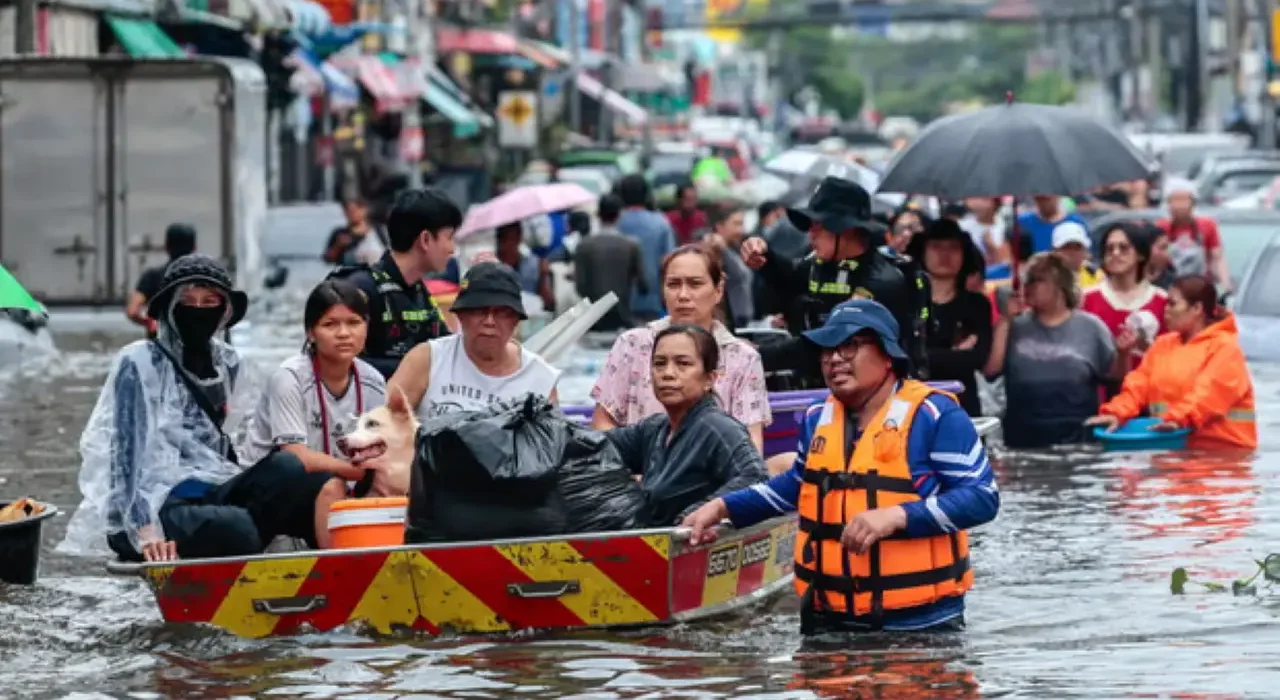
BANGKOK, Thailand – Floodwaters across Bangkok started receding on Tuesday after days of intense rain paralysed roads, displaced residents, disrupted aviation and pushed Thailand into a costly recovery operation. Authorities still face deep water in low-lying districts, strained drainage systems and major transport disruption across one of Asia’s busiest capitals.
Bangkok received about 320 millimetres of rain over two to three days, close to the city’s normal total for September. The volume overwhelmed canals, pumping stations and surface drainage networks. Officials placed all 50 districts under disaster status as water moved through homes, roads, commercial areas and transport corridors. Around 700,000 people in Bangkok felt direct effects from the flooding, while Thai authorities recorded wider flood impacts across dozens of provinces.
The human cost has risen alongside the infrastructure damage. Thai media reported at least 12 flood-related deaths nationwide, including two in Bangkok. Nearly 7,000 people entered shelters in the capital as emergency teams prioritised older residents, people with disabilities and households trapped near canals. Rescue crews used boats, high-clearance vehicles and temporary evacuation points to move people away from flooded communities.
Bangkok Governor Chadchart Sittipunt has focused city operations on drainage, canal management and emergency access. Rainfall filled major waterways faster than pumping systems moved runoff toward the Chao Phraya River. City crews therefore faced a hydraulic bottleneck. Water from surrounding communities kept replacing volumes pumped from major canals, slowing drawdown across affected districts.
The floods also hit Thailand’s aviation system. Thai Airways reduced about 30 departures from Bangkok on Tuesday, equal to roughly 30 percent of its planned departures from the capital. Chief Executive Chai Eamsiri said, “Almost 100% of flights over the past two days were delayed, with fewer than 3% on schedule.” The airline expects reduced operations to continue for at least three days. Around 5,000 bags remained stranded at Suvarnabhumi Airport as staff worked through a severe ground-handling backlog.
If you are travelling through Bangkok this week, your biggest risk involves surface transport and airline ground operations rather than airport closure. Suvarnabhumi stayed open through the flood emergency, yet staff shortages, flooded access routes and baggage congestion hit passenger processing. Thai Air Force personnel joined airport teams to support baggage handling after many civilian workers struggled to reach duty stations.
The commercial losses now extend far beyond airlines. Thailand’s Industry Ministry reported 1,267 affected businesses across 40 provinces, including 52 factories and 1,162 small and medium enterprises. Authorities estimated nationwide economic damage above $320 million. Those losses cover interrupted production, damaged stock, lost trading hours, logistics delays and repair costs. Small businesses face the sharpest cash-flow pressure because many operate with limited insurance, thin working capital and heavy dependence on daily turnover.
Street-level disruption shows why recovery figures matter. Flooded roads blocked customer access. Workers missed shifts. Deliveries slowed. Some retailers faced panic buying as households secured food and bottled water. Floodwater also created contamination risks around homes, markets and commercial premises. Businesses reopening after inundation need electrical inspections, sanitation work, inventory checks and documented damage assessments before normal trade resumes.
One resident, Naowarat Supanikorn, described the personal pressure behind those economic statistics. After floodwater entered her home and disrupted her employment, she said, “I’m not worried about me but I’m worried about my pets.” Her situation reflects a wider problem during urban disasters. Income stops while household costs continue. Recovery therefore depends on drainage and shelter support as well as wage continuity, small-business relief and basic household assistance.
Thailand’s wider flood emergency also reaches beyond Bangkok. Government figures published on Monday recorded flooding across Bangkok and 27 provinces, affecting more than 1.79 million residents and over 576,000 households. Water levels were rising in several central and eastern provinces even as conditions improved elsewhere. Disaster agencies deployed pumps, rescue personnel, drinking water and evacuation support while coordinating with police, military units, volunteers and local authorities.
Regional weather adds another layer of risk. Myanmar and Cambodia have also reported severe flooding. Myanmar recorded deaths and missing people after heavy rain and landslides in the Tanintharyi region. Cambodia reported flash floods across multiple provinces and thousands of evacuations. The same broad monsoon pattern has placed transport networks, agriculture and urban drainage systems under pressure across mainland Southeast Asia.
Bangkok’s flood exposure has long reflected its low elevation, dense construction, extensive canal network and high runoff volumes during intense rainfall. The latest event places new attention on drainage capacity, retention areas, pumping infrastructure and land-use planning. Engineers will study rainfall intensity, peak discharge, canal storage and pump throughput. Emergency planners will focus on warning lead times, evacuation routes and continuity plans for hospitals, airports and mass transit.
The government expects standing water in Bangkok to clear within two to three days if heavy rain stays away. Cabinet discussions also include longer-term flood recovery and prevention measures. Short-term pumping will remove water. Long-term resilience requires expanded drainage capacity, protected retention zones, stronger flood barriers, reliable pump redundancy and stricter control over development in high-risk catchments.
For travellers, businesses and residents, the next few days will test Bangkok’s recovery speed. Check airline schedules before leaving for the airport. Allow extra road travel time. Avoid flooded streets because water depth, current strength, open drains and electrical hazards remain difficult to judge from the surface. Business owners should photograph damage, isolate unsafe electrical systems, protect records and track flood-related losses for insurance or relief claims.
Bangkok is moving from emergency response toward recovery, but the financial bill already runs into hundreds of millions of dollars. Thailand now faces a second task after pumping streets dry. Authorities must rebuild confidence in drainage, transport continuity and disaster readiness before another extreme rainfall event places the same systems under pressure.