

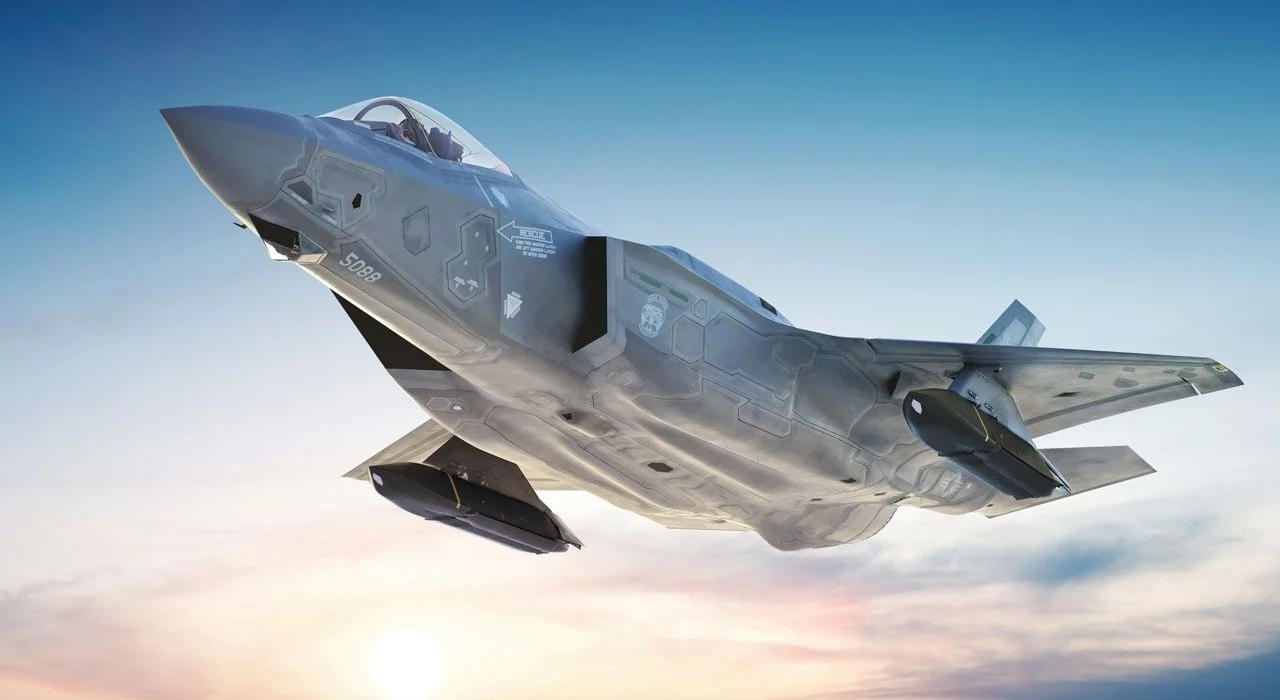
WASHINGTON, United States – The Pentagon is trying to recover F-35 fighter components after a shipment travelling from Australia to the United States ended up in Hong Kong, where the Chinese government later took possession of two items, according to people familiar with the incident. The episode has triggered investigations in Washington and Canberra and raised new questions over security across one of the most tightly controlled military supply chains in the world.
The shipment left Australia earlier this year and carried a cockpit canopy and a weapons-bay door from an Australian military F-35. UPS handled the consignment on a route intended for the United States, where specialists planned to inspect the parts for repair or disposal. The load stopped in South Korea before moving to Hong Kong. Public reporting has not established why the route changed, who ordered the diversion, or whether human error, logistics software, or another cause produced the change.
Lockheed Martin supplied both components, and people familiar with the case said each carried radar-absorbing material. Such material forms part of the F-35’s low-observable design, which reduces detection by hostile radar systems. The Pentagon has described the components as unserviceable, while Australian Defence Minister Richard Marles has rejected suggestions involving highly sensitive equipment. Those descriptions do not fully settle concerns over what engineers or intelligence specialists might learn from physical access to damaged or retired parts.
Marles confirmed Australian authorities were assisting the American investigation. “We’re not talking about sensitive parts here,” he told reporters in Adelaide. Canberra operates 72 F-35A aircraft and participates in a multinational support network linking operators, maintenance centres, contractors and shared spare-parts systems across several countries.
The latest reporting adds a more serious element. People familiar with the matter said the Chinese government took possession of the canopy and weapons-bay door and has not returned either component. No public account identifies which Chinese authority holds the items, where officials stored them, or whether technical examination took place. Those unanswered points now sit at the centre of American concern because physical access creates a different security problem from a package lost in transit.
JJ Gertler, a former Congressional Research Service aviation analyst and current director of the Defense Concepts Organization, has warned about longstanding Chinese interest in F-35 information. “China has been aggressively trying to get F-35 data through electronic espionage, among other means,” Gertler said. His warning focuses attention on a central issue for investigators, whether possession of physical components gives foreign specialists a route to compare real materials against intelligence gathered through other methods.
Defence analyst John Conway urged caution over assumptions about every missing F-35 component. “There are thousands of components in an F-35. Some are routine in what they are and what they do, others are more sensitive,” Conway said. His distinction matters because investigators still need to establish the precise technical condition, configuration, coatings and data value of the items before reaching firm conclusions about exposure.
The House Armed Services Committee has also entered the case. Committee spokesperson Heather Vaughan said, “The committee is aware of this issue.” Congressional staff have received multiple briefings, while lawmakers continue oversight of the diversion. The scrutiny reflects broader concern over accountability inside a weapons programme spread across government offices, Lockheed Martin, partner countries, maintenance hubs and commercial transport companies.
The F-35 programme relies on international production and sustainment. Australia serves as an important Indo-Pacific inventory and maintenance hub for allied fleets across the region. Japan, South Korea, Singapore and Australia all participate in the wider F-35 ecosystem, while operators elsewhere depend on shared logistics arrangements. Such integration reduces duplication and supports fleet availability, yet every additional transfer point creates another place where documentation, custody and routing controls must work without failure.
The current incident also exposes the importance of ordinary commercial logistics inside advanced military programmes. A stealth fighter attracts attention for sensors, weapons, software and radar performance, yet a shipping label, freight transfer, customs process or routing instruction also sits inside the security chain. Investigators therefore need to reconstruct every handover from the Australian origin point through South Korea and onward to Hong Kong, including electronic records, contractor instructions and custody logs.
If you follow military procurement across Africa, the case carries a wider lesson. Security does not end when a defence ministry signs a contract or receives aircraft, drones, radars or communications equipment. Maintenance arrangements, overseas repairs, software support, spare-parts storage, freight companies and subcontractors all create security responsibilities. Governments expanding military procurement should examine contractual control over sensitive components and demand clear custody rules across foreign repair networks.
The incident also highlights dependence on prime contractors for records and logistics. Lockheed Martin manages the broader F-35 supply network, while commercial carriers move some components between operators and repair centres. Australian authorities are reviewing activity on the Australian side. American investigators are examining the wider chain. A complete account will require records from every organisation involved in packing, booking, routing, accepting, transferring and holding the shipment.
Questions now extend beyond recovery. Investigators need to determine why the consignment reached Hong Kong, whether existing export-control procedures flagged the diversion, how long authorities took to identify the problem, and whether anyone accessed the parts before officials began recovery efforts. They also need to establish whether current transport controls treat unserviceable components differently from operational equipment, especially where stealth coatings or specialised materials remain present.
Pentagon officials are working with American authorities and industry partners to recover the components, investigate the diversion and strengthen safeguards, according to the F-35 Joint Program Office. Recovery would address possession, but the security assessment still needs to examine possible exposure during the months since the shipment left Australia. The final findings will matter to every F-35 operator because shared logistics depend on confidence in common procedures across borders.
For Washington, Canberra and Lockheed Martin, the immediate task is straightforward in description and difficult in execution. Recover the components, reconstruct the route, identify the failure point and determine whether foreign specialists gained technical information. The F-35 programme rests on advanced engineering, multinational trust and disciplined logistics. This episode has placed all three under renewed scrutiny, with investigators now tracing how two military aircraft parts travelled from an allied maintenance system into Chinese government custody.