

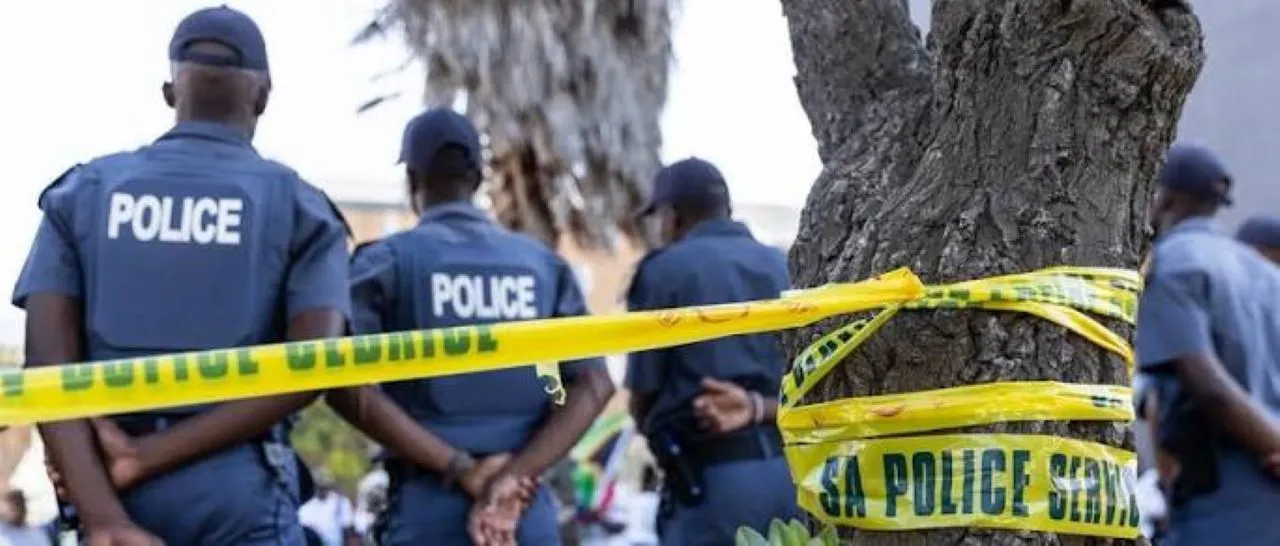
CAPE TOWN, South Africa – Police recorded 5,427 murders across South Africa between April and June 2026. The figure equals almost 60 killings every day, around one death every 24 minutes. Britain, with a slightly larger population, recorded roughly two homicides daily in The Telegraph’s comparison. South Africa therefore faces a national emergency, even after murders fell 5.9 percent from the same quarter last year.
Calling South Africa the “murder capital of the world” makes an understandable emotional point, but global rankings require care. United Nations data do not place South Africa unambiguously first. UNODC data gave South Africa a homicide rate of 43.72 per 100,000 people for 2022. Several smaller countries and territories recorded higher rates in comparable years. South Africa still sits among the world’s most violent societies outside active war zones, especially among large economies and democracies.
The harder question asks why so many South Africans kill other South Africans.
The answer starts with a fact often lost beneath headlines about gangs. Most killing does not begin with sophisticated organised crime. Police analysis of 5,170 murder cases from the latest quarter found arguments and fights as the largest identified motive, accounting for 880 deaths. Retaliation and revenge accounted for 307. Vigilantism accounted for 305. Robbery accounted for 279. Gang killings accounted for 251. Taxi conflict and hijacking added further deaths.
South Africa therefore faces a culture of interpersonal violence alongside organised crime. Acting Police Minister Firoz Cachalia described alcohol as a primary driver. He said violence clusters around weekends, nights and liquor outlets. Many killings involve people drinking together before trivial disputes turn deadly. Police recorded 7,439 serious contact crimes linked to alcohol during the quarter, including 250 murders.
Alcohol does not pull a trigger by itself. Guns turn anger into funerals.
Police examined weapons in the same murder sample and linked firearms to 2,513 deaths. Knives accounted for 714, other sharp instruments 455 and blunt instruments 213. Guns therefore featured in close to half of analysed killings. A fist fight becomes fatal when someone carries a pistol. A gang dispute becomes a massacre when attackers carry automatic rifles. A domestic argument becomes irreversible in seconds.
South Africa also suffers from a large illegal firearms economy. Criminal networks obtain weapons through theft, diversion from lawful owners, private security firms and leakage from state institutions. The Institute for Security Studies has repeatedly linked rising multiple murders with firearm availability, organised crime and weaknesses inside police crime intelligence and firearm control.
Then comes organised crime.
Cape Town’s Cape Flats carry one of the clearest examples. Police classified 251 murders nationally as gang-related during the quarter. The Western Cape accounted for 217. Drug markets, territorial control and retaliation sustain cycles where one shooting produces another. The Telegraph reported around 150 gangs operating across the Cape Flats, while communities describe gunfire as part of ordinary life.
KwaZulu-Natal faces another version. Hitmen, taxi disputes, political killings and protection rackets have produced repeated assassinations. Gauteng faces extortion, armed robbery, kidnapping and violence around illegal mining. Different provinces show different criminal economies, yet the common element stays consistent. Criminal groups believe violence works.
Why would criminals believe violence works? Because punishment often arrives slowly, inconsistently or never.
South Africa has capable detectives, prosecutors and specialist units. Many officers risk their lives every day. Yet police corruption, weak intelligence, poor detective capacity, case backlogs and compromised officials reduce deterrence. The current Madlanga Commission has placed allegations of criminal influence and political interference inside law enforcement under national scrutiny. When citizens suspect police links with criminal networks, confidence collapses and witnesses stay silent.
Impunity then feeds vigilantism. Police recorded 305 vigilante-related murders in the quarter’s analysed cases. Communities frustrated by theft, drugs or weak policing sometimes attack suspected criminals themselves. Such killings deepen the same cycle. Once people stop trusting courts and police, private punishment starts replacing law.
History also matters.
Apartheid did not create every murderer living in South Africa today. Blaming every current crime on a system abolished more than three decades ago excuses present leadership. Yet apartheid built violent policing, forced removals, migrant labour systems, fractured families and segregated communities with weak services. Political violence then intensified during the final apartheid years. South Africa entered democracy carrying deep social trauma and high firearm exposure.
Murder fell sharply after 1994 and reached a modern low around 2011, proving violence was never inevitable. Murder later rose again as governance weakened and organised criminal groups gained ground. Institute for Security Studies analysis links the post-2011 deterioration with weakened institutions, corruption, illegal firearms, drugs, extortion and criminal networks.
Inequality adds pressure, but poverty alone does not explain murder. Poor countries across Africa record far lower homicide rates. South Africa combines extreme inequality with unemployment, fragmented communities, substance abuse, accessible guns, organised criminal markets and weak certainty of punishment. Those factors reinforce one another.
Violence inside homes deserves equal attention. Police received reports of 19,427 serious assaults during the first quarter of 2026, and Institute for Security Studies researchers found 73 percent took place inside homes. Researchers argue children who repeatedly witness violence face greater risk of learning violence as normal conflict resolution. A society cannot police away behaviour formed inside families, schools and neighbourhoods.
The newest statistics offer one reason for hope. Murder fell from 5,770 to 5,427 year on year. Carjackings and several robbery categories also declined. Yet attempted murder rose 8.7 percent to 6,958 cases. Fewer deaths therefore do not erase the wider violence problem.
South Africa needs more than police raids after bloodshed. Government needs relentless illegal-gun recovery, competent detectives, witness protection, functioning crime intelligence, faster prosecutions and severe action against corrupt officers. Cities need targeted hotspot policing. Provinces need tighter liquor enforcement. Communities need youth programmes, parenting support, trauma services and serious domestic-violence prevention.
Most importantly, leaders must stop treating 60 killings a day as another quarterly statistic.
South Africa built one of Africa’s strongest constitutional democracies. Its courts, media, businesses and civil society hold enormous institutional strength. A country with such resources should reject a reality where murder becomes routine.
You should not need armed guards, electric fencing and private security to experience ordinary safety. A child should not learn which street belongs to which gang. A woman should not fear her own home. A shopkeeper should not pay protection money. A commuter should not accept taxi assassinations as business.
The country has already proved murder levels move downward when institutions function. South Africa’s crisis therefore reflects choices, failures and neglected prevention, not some permanent trait among its people.
Almost 60 deaths each day should shock the nation every single day until the number falls.