
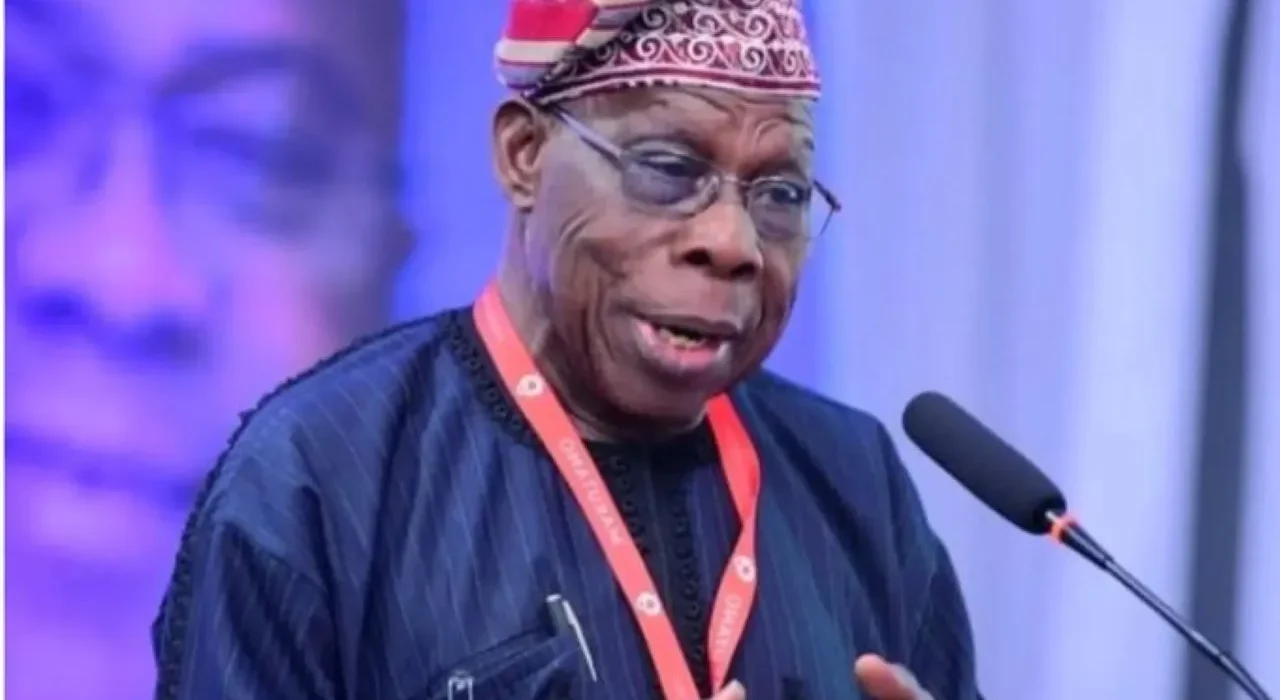
ABUJA, Nigeria – Former Nigerian president Olusegun Obasanjo has reopened one of Africa’s most important historical debates after saying apartheid-era South Africa would not have achieved freedom when independence from racial rule arrived without Nigeria’s sustained support.
Obasanjo made the remarks during an interview on C-Suite Cafe with Ikem Okuhu, where he defended Nigeria’s anti-apartheid record and criticised attacks on African migrants in present-day South Africa. He argued Nigerian support grew from racial solidarity rather than expectations of political or financial reward. “No black man anywhere or black person anywhere should be regarded as an inferior human being because of his colour,” Obasanjo said.
His broader claim carries historical weight, though South Africa’s liberation came from many forces acting together. Internal resistance by the ANC, trade unions, civic movements, students and communities imposed immense pressure on Pretoria. Frontline states including Zambia, Tanzania, Mozambique, Angola, Botswana and Zimbabwe gave sanctuary, training routes and diplomatic backing. International sanctions, divestment campaigns and changing global politics increased pressure during apartheid’s final years. Nigeria nevertheless occupied a major place in this coalition.
South Africa’s own government has repeatedly acknowledged Nigeria’s contribution. During a 2016 address to Nigeria’s National Assembly, former South African president Jacob Zuma said Nigeria played an instrumental role in international anti-apartheid work. He credited Nigeria with helping establish and chair the United Nations Special Committee Against Apartheid, hosting a major United Nations anti-apartheid conference in 1977 and providing support for exiled South Africans.
Nigeria also opened its universities to South African students and created the Southern African Relief Fund in 1976. Civil servants contributed through salary deductions popularly called the “Mandela Tax.” Nigerian citizens, students and public institutions funded humanitarian aid, scholarships and liberation activity. Zuma later called those contributions a “real selfless contribution” to South African freedom.
Lagos also gave political space to liberation organisations. Historical research records offices for the ANC and other southern African movements in Nigeria. Nigerian governments pushed sanctions, backed diplomatic isolation of Pretoria and used sport as political pressure. Nigeria joined or encouraged boycotts linked to apartheid, including Commonwealth sporting action during periods when Western governments resisted stronger sanctions.
Nelson Mandela personally recognised Nigerian solidarity. Records from the Nelson Mandela Foundation recount his early visit to Nigeria while seeking African support for the ANC. Mandela later recalled receiving “solid support” from Nigerians and described such solidarity as a major source of inspiration. Foundation records also note Nigerian financial contributions, military training and support for exiles and refugees.
Oliver Tambo also named Nigeria among states whose support sustained the liberation struggle. In a 1990 speech, the ANC leader thanked Zambia, Tanzania, Mozambique, Zimbabwe, Angola, Botswana, Namibia and Nigeria for holding ground for South African liberation movements. Such evidence makes dismissal of Nigeria’s contribution historically indefensible.
Obasanjo’s intervention arrives during a bitter period in Nigeria-South Africa relations. Nigeria’s National Assembly suspended official visits to South Africa on September 11 and announced a boycott of South African-hosted legislative activities over attacks and hostility directed at Nigerians and other African migrants. Nigerian lawmakers said protection of citizens, businesses and personal dignity required stronger action from Pretoria.
Reuters reported Nigerian authorities recorded 98 Nigerian deaths in mob, hate-related and extrajudicial incidents in South Africa since 2022. Nigeria also evacuated 1,695 citizens during 2026 amid rising anti-migrant hostility. South African Foreign Minister Ronald Lamola has condemned xenophobic violence, while Pretoria continues to face pressure over community groups targeting migrants.
Obasanjo challenged attempts to justify mob action through immigration concerns. South Africa has every right to enforce immigration law and prosecute foreign nationals involved in crime. Law enforcement belongs to police, prosecutors and courts. Mobs have no lawful mandate to raid homes, destroy shops or punish entire nationalities.
His argument carries a deeper moral charge because Nigerian solidarity during apartheid reached beyond government diplomacy. Ordinary Nigerians contributed wages. Students gave money. Universities educated South Africans. Nigerian diplomats fought Pretoria in international forums. Nigerian leaders backed sanctions despite commercial costs. South Africans fleeing repression found political and educational support far from home.
None of this gives Nigerians permanent immunity from South African law. Historical solidarity does not erase immigration rules. Nor does Nigerian support entitle Abuja to dictate domestic policy in Pretoria.
History creates a different obligation. South Africa’s democracy grew partly from African solidarity across borders. A democratic state born from resistance to racial classification faces a serious contradiction when African migrants suffer collective blame because of nationality.
South Africa also owes its freedom first to South Africans who confronted apartheid inside townships, workplaces, prisons, universities and underground networks. Mandela himself stressed the primacy of internal resistance. Obasanjo’s claim therefore works best as a statement about timing and international pressure, rather than a claim of exclusive Nigerian ownership over South African freedom.
Yet Nigeria’s record deserves stronger recognition across the continent. Younger Africans often encounter apartheid history through Mandela, Robben Island, Soweto and sanctions from Western states. Far fewer learn how African governments and ordinary African workers funded, housed, educated and defended liberation movements.
South Africa’s government itself says Nigeria spearheaded campaigns for political and economic sanctions and backed the ANC before formal diplomatic relations began in 1994. Pretoria also describes Nigeria as a strategic partner for African integration and continental renewal.
Those words now face a practical test.
Pretoria must protect migrants from violence while enforcing immigration law without fear or favour. Abuja must protect Nigerians without feeding anti-South African hostility. Both governments need arrests for criminal attacks, transparent investigations and serious diplomacy.
Obasanjo has reopened history at a moment when history matters. Nigeria did not defeat apartheid alone. South Africans carried the central burden, while frontline states and global allies applied pressure from outside.
Nigeria still earned a permanent place in the story.
When Nigerian workers surrendered part of their salaries for South African freedom, they made a choice about African solidarity. Three decades after apartheid, violence against Africans in democratic South Africa raises an uncomfortable question.
What happened to the solidarity which helped make freedom possible?