
ABUJA, Nigeria – Claims that Christians are facing genocide in Nigeria have moved beyond religious campaigns and social media. They have influenced United States policy, damaged relations between Washington and Abuja and contributed to direct American military action on African soil.
The central question is no longer whether Christians are being killed in Nigeria. They clearly are. Christian communities have suffered massacres, church attacks, abductions, displacement and the murder of religious leaders.
The more difficult question is whether these atrocities form one coordinated campaign intended to destroy Nigeria’s Christian population—the legal threshold required for genocide.
Available evidence presents a far more complicated picture than the narrative promoted by some American politicians and campaign groups.
President Donald Trump placed Nigeria on the US list of “Countries of Particular Concern” in October 2025, accusing its government of failing to protect Christians.
“Christianity is facing an existential threat in Nigeria,” Trump declared before instructing the Pentagon to prepare for possible military intervention.
He threatened to stop American assistance and warned that US forces could enter Nigeria “guns-a-blazing” if the killings continued. The language followed pressure from American conservative and evangelical groups, as well as Republican lawmakers including Senator Ted Cruz.
Cruz and other campaigners cited claims that more than 50,000 Nigerian Christians had been killed since 2009 and that thousands of churches had been destroyed. Some of those figures originated from Nigerian advocacy organisations whose methods and classifications have been challenged by conflict researchers.
On Christmas Day 2025, the United States conducted strikes against suspected Islamic State positions in Sokoto State. US Africa Command said several militants were killed in the operation, which was coordinated with Nigerian authorities.
Trump presented the strikes as action against extremists accused of killing Christians. Nigeria, however, insisted that the operation was part of a broader counterterrorism partnership.
Foreign Minister Yusuf Tuggar described it as a joint operation against terrorists that had “nothing to do with a particular religion.”
Approximately 200 American troops were subsequently deployed to Nigeria to support intelligence gathering, military training and counterterrorism operations. Most are now being withdrawn after participating in a joint operation that reportedly killed a senior Islamic State commander.
The American military involvement shows how rapidly a powerful political narrative can move from social media and religious lobbying into sanctions, diplomatic pressure and missile strikes.
Yet Nigeria’s security crisis cannot be accurately explained through religion alone.
The country is fighting Boko Haram, Islamic State West Africa Province, armed bandits, organised kidnapping networks, separatist movements and militias involved in communal conflicts. There are also violent disputes over farmland, grazing routes, water, political influence and ethnic control.
Some attacks are unquestionably religious.
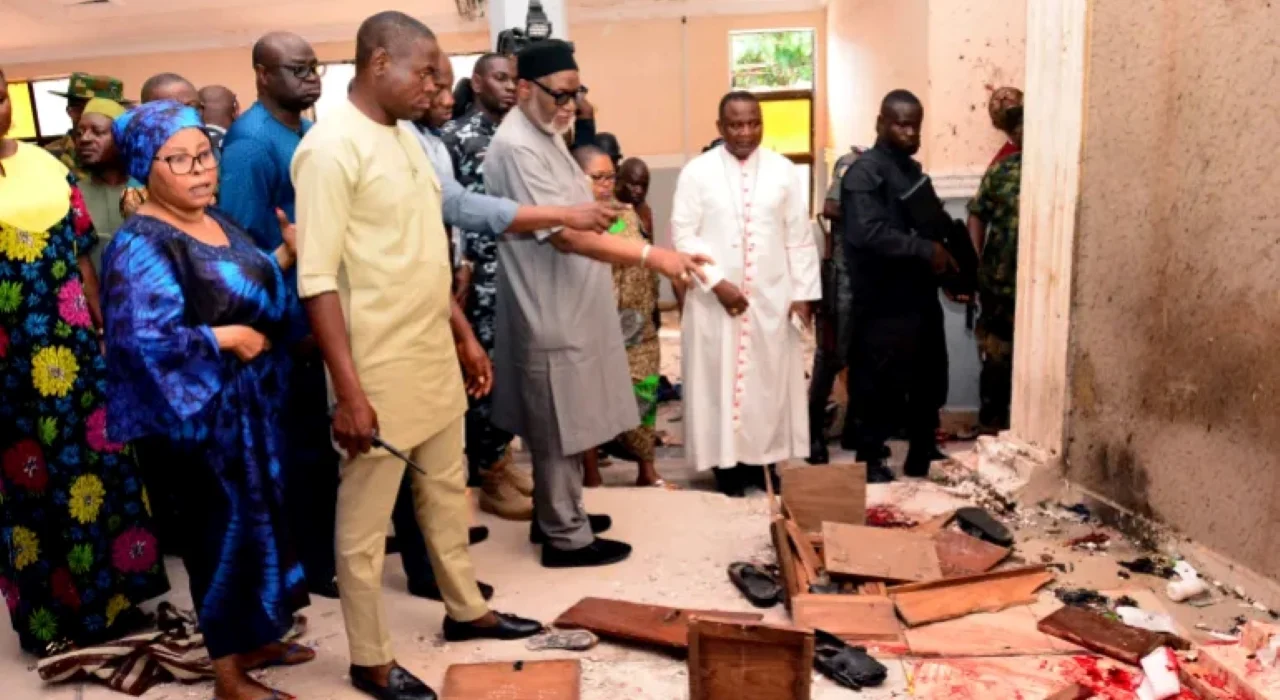
Boko Haram and Islamic State-linked groups have attacked churches, murdered Christians and attempted to impose extremist interpretations of Islam. Christian communities in Plateau, Kaduna, Benue and other states have repeatedly been attacked, sometimes while worshipping or sheltering inside churches.
The June 2025 massacre at Yelwata in Benue State killed scores of people, many of them displaced Christians staying near a Catholic mission. In January 2026, gunmen abducted more than 150 worshippers from three churches in Kaduna State.
Such attacks cannot be dismissed as ordinary crime. There is credible evidence that Christian identity has influenced the selection and treatment of victims in parts of Nigeria.
However, Muslims have also been killed in enormous numbers. Boko Haram and Islamic State consider many Muslims who reject their ideology to be enemies or apostates. Armed groups have attacked mosques, Muslim villages, traditional rulers and Islamic scholars.
A major jihadist attack in Kwara State in February 2026 killed scores of residents after communities reportedly resisted attempts to impose extremist rule. Most of those killed were Muslim.
African Union Commission Chairperson Mahmoud Ali Youssouf rejected the genocide description, warning that “the first victims of Boko Haram are Muslims, not Christians.”
Conflict-monitoring organisations have produced sharply different figures, demonstrating how difficult it is to reduce Nigeria’s violence to a single religious explanation.
Data from the Armed Conflict Location and Event Data project recorded 20,409 deaths in 11,862 attacks against Nigerian civilians between January 2020 and September 2025.
Within that total, ACLED identified 385 attacks in which Christian identity was reported as a factor. Those incidents caused 317 deaths. It recorded 417 Muslim deaths in 196 attacks during the same period.
ACLED has stressed that its category covers incidents where available reporting specifically identified religion as a motive. Many reports do not record the religion of victims, meaning its figures should not be interpreted as the total number of Christians or Muslims killed.
The Observatory for Religious Freedom in Africa reached a significantly different conclusion after supplementing media and official reporting with local researchers and community testimony.
Its six-year study covering October 2019 to September 2025 recorded 42,033 civilian deaths. It identified 22,835 Christian victims, 10,519 Muslim victims and 184 followers of African traditional religions. The faith of another 8,495 victims could not be established.
After considering the religious populations of affected states, the observatory concluded that Christians were killed at 4.4 times the rate of Muslims in those areas.
It attributed 44% of civilian killings to armed groups it classified as Fulani terror organisations, while Boko Haram and Islamic State West Africa Province together accounted for 12%.
Those findings provide serious evidence that Christians have suffered disproportionately in important parts of northern and central Nigeria. They also challenge attempts to portray every attack as random banditry or an uncomplicated dispute between farmers and herders.
But disproportionate casualties do not automatically establish genocide.
Under international law, genocide requires evidence of an intention to destroy, completely or partly, a national, ethnic, racial or religious group. Nigeria’s violence involves numerous organisations with different leaders, objectives and methods operating across a vast country.
Some militants are driven by religious extremism. Others seek ransom, cattle, territory, political influence or control of criminal markets. Farmer-herder clashes may combine land disputes, ethnic divisions, religion, revenge and organised crime.
No publicly established evidence has yet demonstrated that these different actors are part of one coordinated national project to eliminate Christianity from Nigeria.
That does not excuse the Nigerian government.
Abuja has frequently failed to protect vulnerable villages, respond rapidly to warnings, prosecute attackers or explain why armed groups can return repeatedly to the same communities. Security forces have also faced allegations of abuses and deadly mistakes during counterterrorism operations.
Nigeria cannot use the complexity of the crisis to minimise Christian suffering. Denying documented persecution is as dangerous as exaggerating every attack into proof of genocide.
The evidence supports the conclusion that Nigerian Christians face severe persecution and, in some regions, disproportionate violence. It also shows that Muslims are being massacred by many of the same armed organisations.
What the evidence does not conclusively support is the simplified claim that all -or even most – of Nigeria’s insecurity forms one coordinated Christian genocide.
Washington’s intervention may have targeted genuine extremists, but military action does not prove the political narrative used to justify it. Missiles can destroy a militant camp; they cannot resolve land disputes, government failure, rural poverty, impunity and the collapse of local security.
Nigeria is experiencing a national protection crisis with a serious religious dimension. Calling it only a Christian genocide may attract international attention, but it risks hiding Muslim victims, inflaming sectarian divisions and producing foreign policies based on an incomplete understanding of Africa’s most populous country.