

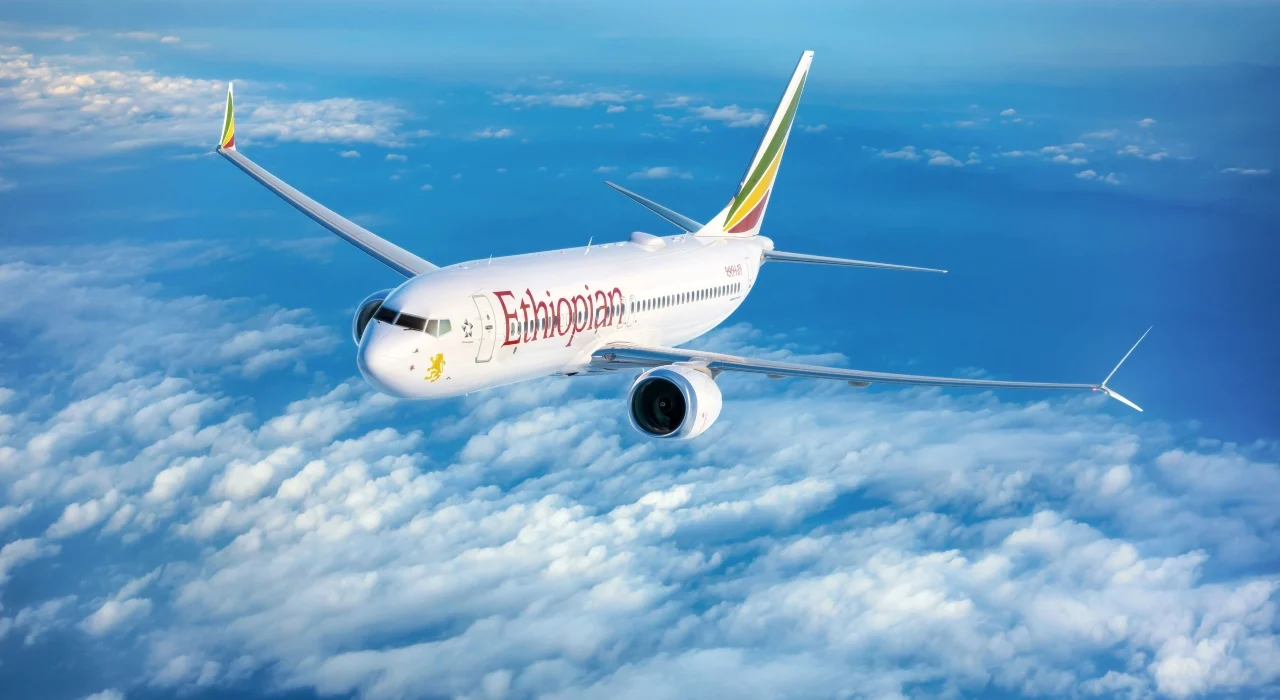
ADDIS ABABA, Ethiopia – Ethiopian Airlines is close to acquiring as many as 10 long-haul Boeing cargo aircraft as Africa’s largest carrier prepares to strengthen its freight network and develop a major aviation hub capable of competing with those in the Gulf.
The proposed agreement is expected to involve between eight and 10 aircraft, according to industry sources familiar with the negotiations. It would probably include two current-generation Boeing 777F freighters, with the remaining aircraft expected to be the new 777-8F model.
The negotiations have not yet produced a publicly announced agreement, and the final number of aircraft could still change. Boeing declined to comment on what it described as speculation, while Ethiopian Airlines did not immediately issue a statement.
If completed, the order would represent another major expansion of Africa’s most powerful aviation company and strengthen Ethiopia’s position as the continent’s leading gateway for international air cargo.
Ethiopian Airlines already operates 12 Boeing 777F aircraft, three Boeing 767 freighters and four converted Boeing 737 cargo planes serving medium-distance routes. Its entire passenger and cargo fleet stands at approximately 147 aircraft.
The 777F is one of the world’s largest and most capable twin-engine cargo aircraft. Its range and payload allow airlines to transport heavy and time-sensitive goods between continents without relying on the more expensive four-engine freighters used by some older cargo operators.
For Ethiopian Airlines, the aircraft are especially important for moving flowers, coffee, fresh produce, pharmaceuticals, textiles, industrial equipment and other goods between Africa, Europe, Asia, the Middle East and the Americas.
The possible purchase also comes at an important moment for Boeing.
International aircraft-emissions regulations mean the American manufacturer is currently expected to stop producing the existing 777F at the end of 2027. Boeing has sold more than 400 of the aircraft, making it one of the company’s most commercially successful cargo models.
However, the replacement 777-8F has been delayed by continuing certification problems affecting Boeing’s wider 777X programme. The delay threatens to create a production gap between the end of the current 777F and the arrival of its successor.
Boeing has asked the United States Federal Aviation Administration for permission to deliver another 35 current-generation 777F aircraft after the deadline. The company argues that additional production is necessary to meet strong demand and keep factories and suppliers operating until the 777-8F is ready.
The request remains under consideration. It is not yet clear whether the two current-generation aircraft under discussion with Ethiopian Airlines would be delivered before or after the 2027 deadline.
For Boeing, the Ethiopian order would help keep the 777 cargo production line active. For Ethiopian Airlines, it would provide aircraft that are already proven within its fleet while preparing the carrier for a gradual transition to the next-generation 777-8F.
The airline has not limited its options to Boeing. It has also been evaluating the Airbus A350F, Europe’s new-generation cargo aircraft, whose first flight is expected later this year. That gives Ethiopian Airlines leverage as the two largest aircraft manufacturers compete for one of Africa’s most strategically important aviation customers.
In March, the airline also signed agreements with aircraft leasing company AerCap for two Boeing 777-300ER passenger jets that will be converted into freighters. Those aircraft will provide additional cargo capacity without requiring the airline to wait for newly manufactured jets.
The growing freighter fleet is closely connected to Ethiopia’s $12.5 billion Bishoftu International Airport project, which is being built approximately 45 kilometres southeast of Addis Ababa.
Construction began in January, with the first phase expected to open in 2030. The airport is planned to have four runways, parking space for 270 aircraft and eventual capacity for as many as 110 million passengers annually.
“Bishoftu International Airport will be the largest aviation infrastructure project in Africa’s history,” Ethiopian Prime Minister Abiy Ahmed said when construction officially began.
The planned airport will also be capable of handling approximately 3.7 million metric tonnes of cargo annually, according to the African Development Bank. Ethiopian Airlines handled 897,000 tonnes during its most recent financial year, an increase of 16%.
Those figures reveal the scale of the airline’s ambition. Bishoftu would provide more than four times Ethiopian Airlines’ current annual cargo volume, creating room for Addis Ababa to become a global distribution centre rather than merely a transfer point for passengers.
The project is also an African attempt to challenge the dominance of Gulf aviation hubs such as Dubai and Doha. For years, Gulf carriers have used their geographic position, enormous airports and government-backed investment to capture passenger and cargo traffic moving between Africa, Asia, Europe and the Americas.
Large quantities of African cargo are transported through non-African hubs before reaching international markets. This means revenue, logistics jobs, warehousing, aircraft maintenance and other valuable services are often captured outside the continent.
Ethiopian Airlines is trying to change that equation.
Its position in the Horn of Africa gives it access to major shipping and aviation routes linking the continent with the Middle East, Asia and Europe. Its extensive African network also allows it to collect cargo from smaller markets and consolidate it in Addis Ababa for long-haul transportation.
A successful Ethiopian cargo hub could give African farmers, manufacturers and exporters faster access to global markets. Perishable products could reach customers sooner, while improved cold-storage facilities could reduce losses for exporters of flowers, fruit, vegetables, meat and medicines.
The benefits, however, will depend on more than buying aircraft and building runways. Ethiopian Airlines must offer competitive prices, reliable schedules and efficient customs clearance. Road and rail connections between the airport and Ethiopia’s production centres will also be essential.
The financial risks are considerable. Ethiopian Airlines plans to provide approximately 30% of the airport’s cost, with international lenders expected to finance the remainder. The African Development Bank has committed $500 million and is helping mobilise billions more from other financiers.
A project of this size could face construction delays, rising costs and pressure from Ethiopia’s foreign-currency shortages. New aircraft are also expensive assets that must remain busy to generate returns. A large freighter fleet without sufficient cargo demand could quickly become a financial burden.
Yet Ethiopian Airlines has achieved what many African carriers have failed to do: build a broad network, maintain a modern fleet, develop technical expertise and expand without repeatedly collapsing into bankruptcy.
The possible Boeing order is therefore bigger than a transaction between one airline and one manufacturer. It represents an effort to ensure that Africa owns a larger share of the infrastructure carrying its people, products and wealth to the world.
For decades, outsiders have profited from connecting Africa to global markets. Ethiopian Airlines is betting billions of dollars that an African company can build and control one of those global gateways itself.