
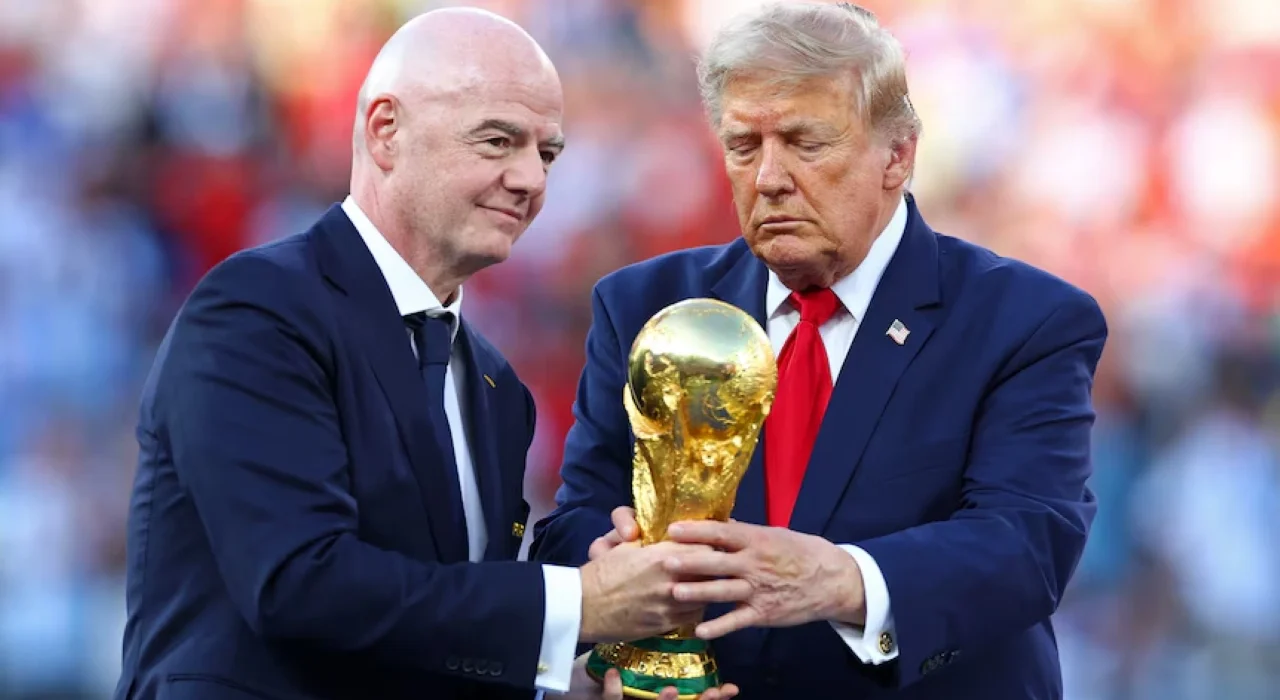
NYON, Switzerland – Gianni Infantino faces the gravest challenge to his decade-long FIFA presidency after UEFA declared loss of confidence in his leadership and demanded accountability over a failed plan to sell private investors a stake in the commercial value of the World Cup.
The revolt has spread beyond Europe.
CONCACAF raised serious objections. The Asian Football Confederation joined the criticism. Senior FIFA adviser Carlos Cordeiro resigned. FIFA chief operating officer Kevin Lamour also left amid the turmoil. Infantino then abandoned the proposal after days of escalating opposition.
UEFA’s intervention carries unusual weight because all 55 European national associations stood together against the proposal.
The message was direct. UEFA described the process surrounding the plan as a failure of leadership and declared the World Cup belonged to football rather than private investors.
“The World Cup is not for sale,” UEFA said.
Infantino has survived controversies involving tournament expansion, World Cup bidding, political relationships and disputes with European football officials since winning the FIFA presidency in 2016.
This dispute feels different.
The argument concerns ownership of FIFA’s most valuable commercial asset and the authority of one president to advance a major financial restructuring before broad consultation with the institutions responsible for world football.
FIFA unveiled FIFA Forward Enterprise on July 28. The proposed commercial subsidiary would consolidate event and commercial operations linked to FIFA competitions. FIFA said private investors would receive a minority interest while FIFA retained at least 80 percent ownership and sole authority over football governance.
The financial promise was enormous.
FIFA said the arrangement would support more than $10 billion in football development funding. Member associations stood to receive sharply increased payments under new Forward programmes.
Infantino had already announced FIFA expected revenue above $15 billion during the 2023 to 2026 cycle. He told national associations after the World Cup he wanted FIFA to exploit more commercial opportunities and increase development funding.
Critics asked a simple question.
Why sell part of football’s richest asset when FIFA already holds billions in reserves, carries no significant debt burden and generates record revenues?
Cordeiro answered through resignation.
The former US Soccer president and former Goldman Sachs executive said he had no role in developing the proposal and opposed the plan “unequivocally.” He called the arrangement bad for FIFA members and bad for football’s long-term interests.
His departure mattered because Cordeiro worked close to Infantino and represented FIFA on the White House task force supporting the 2026 World Cup.
This was no external critic attacking FIFA from a distance.
One of Infantino’s senior advisers walked away.
UEFA President Aleksander Čeferin then intensified the confrontation, describing the proposed arrangement as a “shabby backroom deal” and calling for a full examination of how such a plan reached an advanced stage without proper consultation.
CONCACAF also convened presidents from its member associations to discuss the plan. The confederation criticised the short decision timetable, weak process and absence of proper review through FIFA’s governance bodies.
Asia added further pressure.
AFC President Sheikh Salman joined senior officials questioning the proposal and demanding stronger accountability. The combined resistance transformed a European dispute into a wider rebellion against Infantino’s leadership style.
Infantino retreated.
FIFA announced the proposal would no longer proceed. Infantino said the project had created divisions which undermined its original purpose and promised to bring interested parties together again.
Withdrawal failed to end the crisis.
UEFA argued cancellation did not answer the central governance question. Who designed the plan? Who approved negotiations with investors? Why did national associations learn about such a major restructuring so late? What commitments had already entered discussion?
Those questions now place Infantino personally under scrutiny.
Talk of immediate removal requires caution.
UEFA has declared lost confidence. Reports describing the confrontation as an automatic vote capable of immediately removing Infantino overstate the current position.
FIFA has 211 member associations. UEFA controls 55 votes. Europe therefore carries enormous influence, yet Europe alone does not choose the FIFA president.
The next FIFA presidential election is scheduled for 2027. Infantino announced in May he would seek another term. At the time, his position looked secure. He later said more than 200 associations had pledged support for his re-election.
Those pledges now face their first serious test.
Africa matters enormously.
CAF represents 54 associations. Africa therefore holds almost the same voting strength as Europe. Infantino has spent years building support across Africa through FIFA development payments, infrastructure programmes and direct relationships with football presidents.
If UEFA wants new FIFA leadership, European officials need allies in Africa, Asia, the Americas and Oceania.
This places African football associations in a serious position.
Their decision should not revolve around loyalty to Infantino or hostility toward UEFA.
African federations should ask whether the private investment proposal served African football, whether promised funding justified surrendering commercial ownership, whether proper governance procedures were followed and whether FIFA members received enough information before being asked for support.
Development money must never become a substitute for scrutiny.
African football needs training grounds, women’s leagues, youth academies, stadium improvements and stronger national competitions. FIFA funding serves those needs.
Money does not remove the right to ask how FIFA manages the World Cup.
The World Cup generates its value because national teams, players and supporters give the competition global legitimacy. Selling a commercial interest therefore carries consequences extending far beyond FIFA headquarters.
Infantino’s supporters point toward record revenues, expanded development funding and the commercial success of the 2026 World Cup.
Those achievements remain part of his record.
His critics now argue financial success concentrated too much authority around the president and weakened institutional consultation.
The failed private equity project has turned that long-running concern into an open leadership crisis.
UEFA has crossed a line rarely crossed during Infantino’s presidency. Europe is no longer arguing about one competition format or one calendar decision. Its officials openly question whether they still trust the man running FIFA.
CONCACAF and Asian leaders have shown similar anger.
Infantino survived the deal.
The harder question concerns whether his presidency survives what the deal exposed.
The battle now moves toward the 2027 FIFA Congress, where 211 associations will decide whether record revenues outweigh the governance revolt surrounding the most valuable competition in world sport.