
PRETORIA, South Africa – South Africa has challenged Washington’s decision to exclude Pretoria from the December G20 leaders’ summit in Florida, warning such action threatens the credibility of a forum built on equal membership and collective economic leadership.
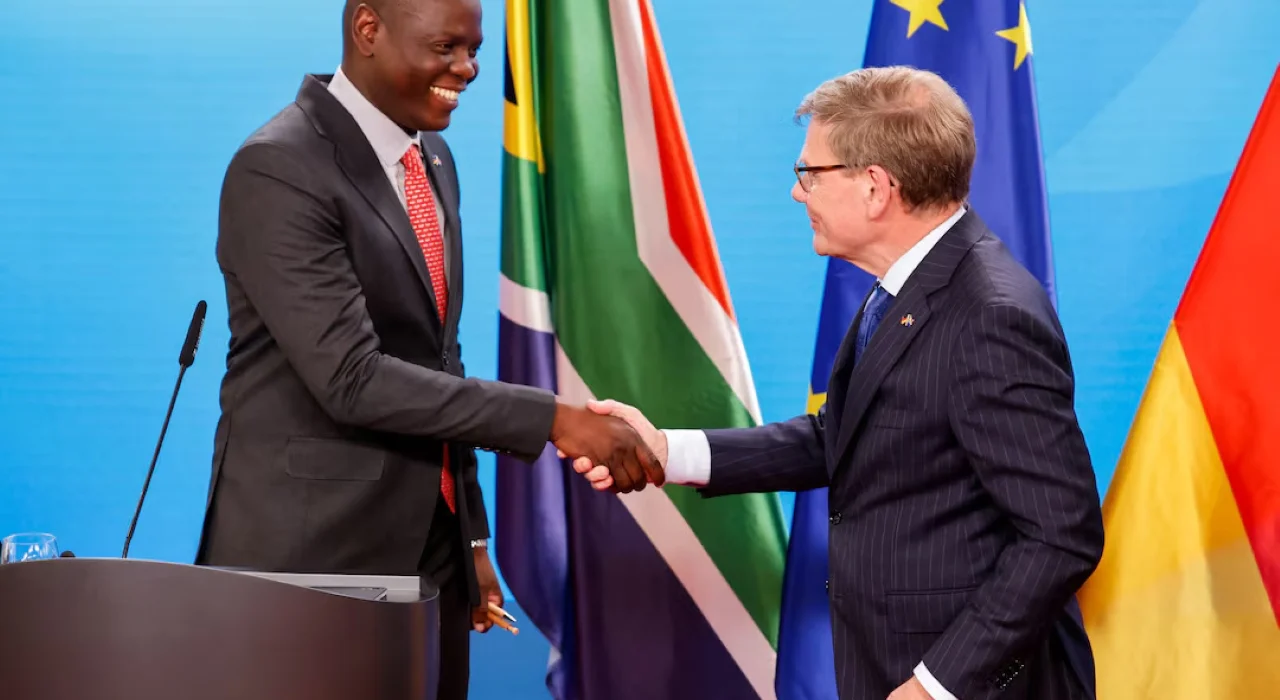
International Relations Minister Ronald Lamola raised the issue during talks with German Foreign Minister Johann Wadephul in Pretoria on July 23. Lamola said South Africa joined the G20 at its creation and does not attend as a guest chosen by each rotating host.
“We are not an invitee,” Lamola said. He argued no single country holds authority to disinvite a founding member and urged every G20 government heading to Florida to place the dispute before the full group.
His question went beyond diplomatic irritation. Lamola asked what kind of forum would meet while excluding a willing founding member. Washington’s decision therefore confronts every G20 capital with a choice between silence and defence of the group’s membership principles.
The United States will host the leaders’ summit on December 14 and 15 at Trump National Doral in Miami. President Donald Trump announced in November 2025 South Africa would receive no invitation. He linked the punishment to a disputed handover episode after the Johannesburg summit and repeated allegations concerning persecution of white South Africans and land confiscation. South Africa rejected those allegations as false.
South Africa has held permanent G20 membership since the forum started in 1999 after the Asian financial crisis. The group began as an informal meeting of finance ministers and central bank governors, then expanded into the leading forum for international economic cooperation. Membership does not normally disappear whenever a presidency changes hands.
The dispute therefore reaches beyond relations between Pretoria and Washington. A host presidency organises meetings, sets priorities and manages access. Host status does not logically grant ownership over the group. Acceptance of unilateral exclusion would let every future president punish a member whose policies offend the host government.
Germany has taken a clear position. Wadephul described South Africa as an indispensable G20 member and promised to support Pretoria’s concerns inside the forum. “We want this voice to be heard,” he said during his visit.
German support matters. Germany and South Africa elevated their relationship to a strategic partnership earlier this year. Around 600 German companies operate in South Africa and employ about 100,000 people. Their ministers also discussed critical minerals, battery production, energy investment and vocational training during the Pretoria meeting.
The G20 dispute arrives after South Africa hosted the first leaders’ summit on African soil in November 2025. Washington boycotted the Johannesburg gathering. Other members adopted a declaration addressing debt, climate pressures, development finance and fair access to green energy. Pretoria regarded the outcome as proof the forum still functioned without American participation.
Washington viewed the episode differently. Trump accused South Africa of mishandling the transfer of the rotating presidency to an American diplomatic representative. South African officials said they completed the transfer through proper diplomatic channels after the United States chose not to attend the summit.
Neither side benefits from permanent hostility. The United States holds major commercial, financial and strategic interests across Africa. South Africa remains the continent’s most industrialised economy, a major mineral producer and an influential voice across the African Union, BRICS and the Global South.
Pretoria also needs disciplined diplomacy. Moral anger alone will not restore access. South Africa should present a formal case to every G20 member, seek a collective ruling on participation and demand written assurance protecting membership under future presidencies.
Other members should avoid private sympathy followed by public silence. Germany has spoken. France has also defended South Africa’s place. Every government attending Miami should state whether a presidency possesses unilateral power to remove a full member from meetings.
Silence would establish a dangerous precedent. A future host might exclude Argentina over trade, Russia over war, India over diplomatic conflict, or another member over domestic policy. The G20 would then stop functioning as a stable economic forum and become a temporary coalition shaped by each host’s political preferences.
Africa also has a direct interest. South Africa remains the only African country holding individual G20 membership, while the African Union holds permanent membership as a continental body. Removing Pretoria would narrow African representation during debates over debt, minerals, energy, food security and development finance.
The controversy also tests America’s stated support for African partnership. Washington regularly asks African governments to choose rules, institutions and transparent cooperation over coercive power. Excluding a member through a presidential decision sends the opposite message.
South Africa should resist any temptation to frame the dispute as hostility toward American citizens. Ramaphosa has repeatedly separated disagreement with the Trump administration from relations with the American public. Such discipline protects long-term ties and leaves room for negotiation.
The G20 faces a basic institutional question. Does membership depend on collective consent, or on the preference of whichever leader controls the venue? An informal forum still requires predictable rules. Without them, equality exists only when dominant hosts approve.
Lamola’s challenge deserves a formal answer before December. Germany’s backing gives Pretoria diplomatic support, but words must produce action. G20 members should insist on South Africa’s participation, establish clear membership safeguards and prevent one bilateral dispute from damaging the entire forum.
A summit excluding South Africa would still gather major economies. Yet the name G20 would hide a serious institutional failure. Washington would host the meeting, but exclusion would weaken the legitimacy of every decision reached inside the room.