

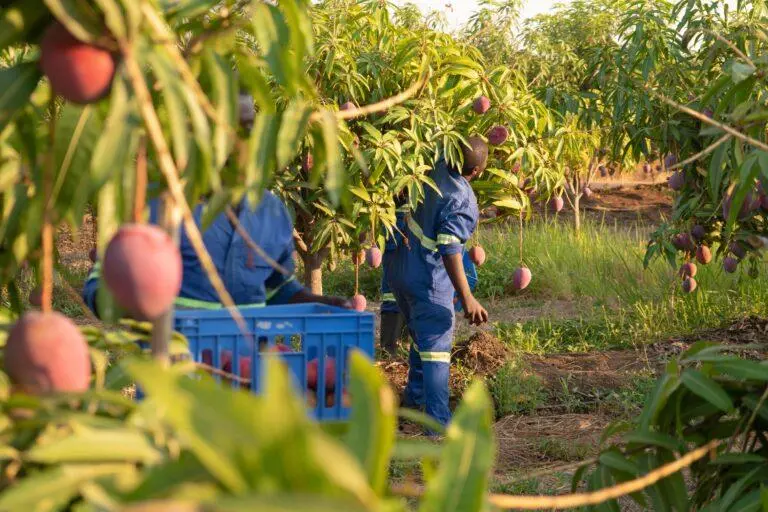
LILONGWE, Malawi – Malawi entered July 22 Mango Day celebrations with a success story rooted in orchards, village cooperatives, processing lines, and export markets. Across Salima, Mangochi, Kasungu, Mzimba, and other producing districts, mango farming supports families, seasonal workers, transporters, traders, food processors, and rural businesses.
Widely cited production estimates have placed Malawi’s annual mango, mangosteen, and guava output near 1.9 million tonnes during strong seasons. Such scale places the country among Africa’s leading fruit producers and gives Malawi a firm base for agricultural diversification. Mangoes also reduce excessive reliance on tobacco by giving growers another commercial crop with domestic and international demand.
The national harvest stretches across several months. Traditional trees begin bearing fruit around October, while commercial varieties extend supply into March. A long season keeps farmers, transporters, packhouses, and factories active for longer. Buyers also gain a wider purchasing window, which supports stable supply and stronger relationships with export markets.
Malawi Mangoes has become one of the clearest examples of this progress. The company works with about 5,000 trained smallholder farmers and operates an integrated orchard and processing business in Salima. Its model links commercial farms, village orchards, irrigation, technical training, certified production, drying facilities, fresh-fruit handling, and export sales.
Those links matter because mango wealth starts with the grower. A farmer who receives grafted seedlings, pruning guidance, pest-control training, irrigation support, crates, quality standards, and a confirmed buyer earns more from each tree. Better orchard management also raises fruit size, appearance, shelf life, and acceptance rates.
For many rural families, mango trees once produced fruit mainly for household use or informal roadside sales. Commercial partnerships now connect selected growers with processors and international buyers. Malawi Mangoes says its operation supports more than 1,000 workers and reaches thousands of farming households through its supply network. The wider community benefits through transport, construction, nursery businesses, water systems, and local trade.
Malawi’s export story is also gaining depth. World Bank trade data recorded about 853 tonnes of fresh or dried mangoes, guavas, and mangosteens exported during 2024, worth roughly US$4.26 million. South Africa received the largest recorded share by volume, while shipments also reached India, Israel, Tanzania, and other markets.
Each shipment carries economic value beyond the fruit. Export sales bring foreign currency into a country facing a persistent trade deficit. They also support packhouse employees, food-safety officers, drivers, customs agents, freight companies, accountants, and farm labourers.
Processing gives Malawi an even larger opportunity. Fresh fruit has a short commercial life after harvest. Drying, pulping, freezing, juicing, and packaging extend shelf life and increase value. Dried mango already forms a major part of Malawi Mangoes’ sales. Certified processing helps Malawian products reach buyers who demand traceability, hygiene, consistent quality, and dependable delivery.
The country now has a chance to build a recognisable Malawian mango identity. Buyers should associate the product with sweetness, quality, responsible farming, and the Warm Heart of Africa. Strong national branding would support premium prices while separating Malawian fruit from anonymous bulk produce.
Farmers also need organised market access. In 2024, agricultural specialists brought smallholder growers from Kasungu and Mzimba to the Salima processing plant for training and market exposure. Growers learned how orchard management, variety selection, quality control, and buyer relationships shape profits. Such programmes turn mango growing from seasonal activity into a structured business.
Cooperatives have an important role. A single smallholder often lacks enough fruit to negotiate transport, storage, packaging, or export terms. Groups collect larger volumes, share equipment, improve bargaining strength, and meet buyer schedules. Government support for cooperatives, irrigation, rural roads, laboratories, and extension services would help more districts join the commercial chain.
Malawi should also expand district collection centres. Solar cold rooms would protect harvested fruit before transport. Shared drying units would reduce waste during peak supply. Pulping plants would serve beverage, bakery, dairy, and baby-food manufacturers. Packhouses would help farmers grade fruit and meet supermarket standards.
The industry offers room for young people. Nurseries need skilled grafters. Orchards need irrigation technicians, machine operators, supervisors, agronomists, mechanics, and digital record keepers. Processing plants need food scientists, electricians, quality controllers, packaging teams, and export officers. Universities and technical colleges should build training programmes around this growing value chain.
Women already hold an important place in mango production and processing. Malawi Mangoes reports a substantial female presence among its seasonal workforce. Wider access to land, finance, orchard ownership, cooperative leadership, and processing contracts would increase household income and strengthen rural communities.
Climate resilience also strengthens the case for mango investment. Established trees provide harvests across many years. Irrigation, water harvesting, mulching, pruning, disease control, and improved varieties protect yields during difficult seasons. Research institutions should continue testing varieties suited to local conditions and buyer preferences.
Malawi’s mango sector now needs ambition equal to its output. Production volume provides the raw material. Processing creates longer shelf life. Branding raises recognition. Export standards build trust. Reliable logistics move fruit from orchards to buyers without waste.
The country should celebrate every grower who tends trees through dry months, every worker who sorts and dries fruit, and every exporter who places Malawian produce on foreign shelves. Their work shows how agriculture supports industrial growth when farms connect with factories and markets.
Mango Day gives Malawi more than a reason for congratulations. The celebration highlights a national asset with room for larger earnings, stronger rural employment, and wider exports. From October through March, the harvest carries the work of thousands of Malawians into local markets and overseas supply chains.
Malawi has the fruit, the farmers, the season, and an established processing base. Continued investment in irrigation, certification, cold storage, transport, finance, and marketing will turn greater volumes into greater national value.
The mango story deserves pride. Malawi is growing more than fruit. The country is building farms, factories, skills, exports, and rural incomes around one of Africa’s most loved crops.